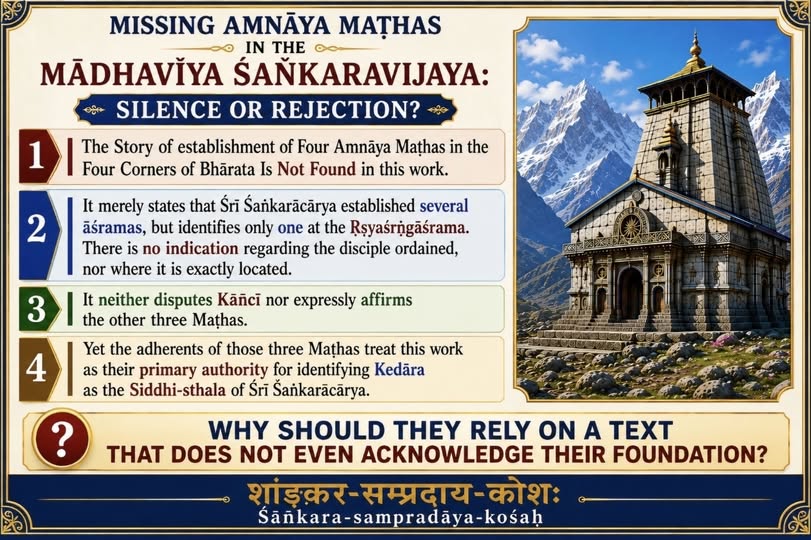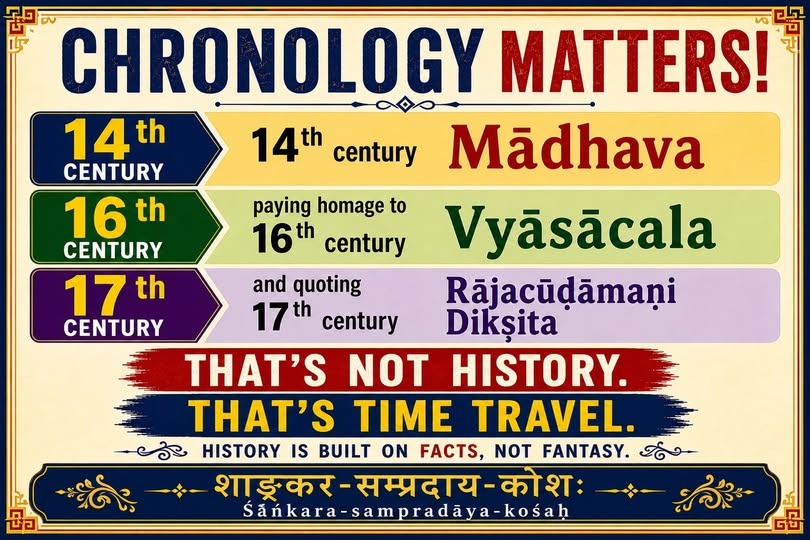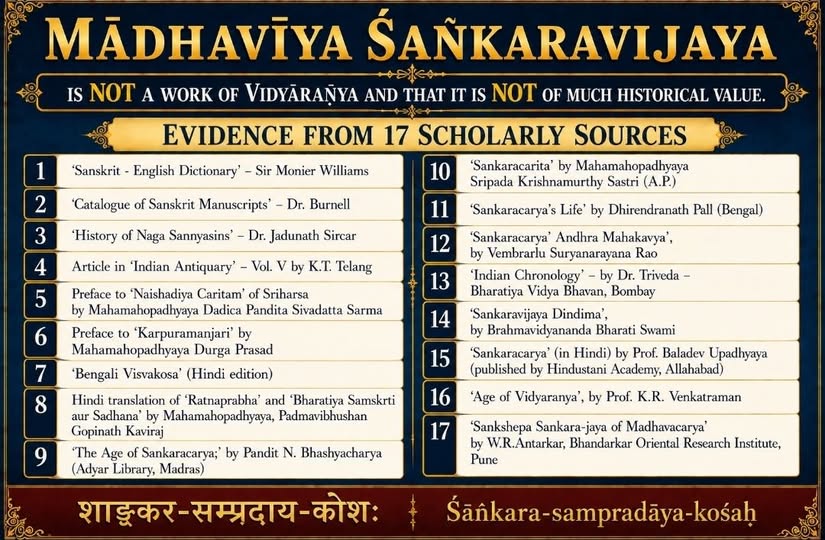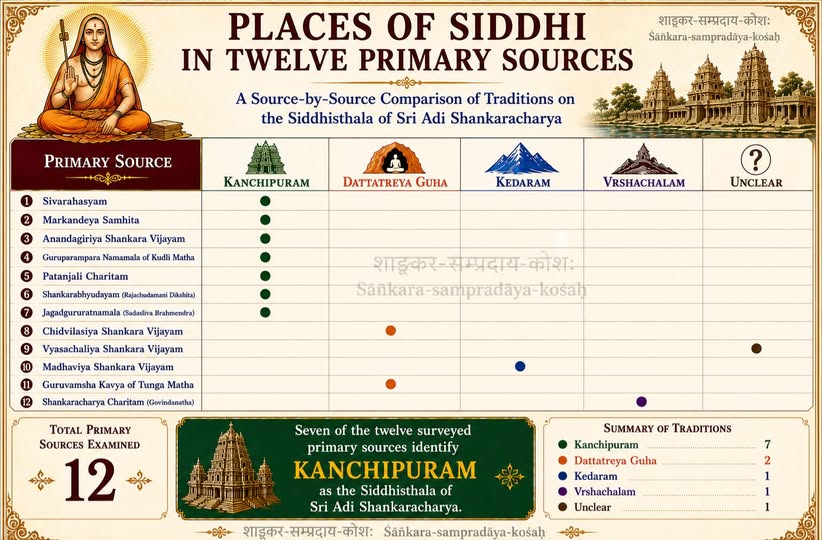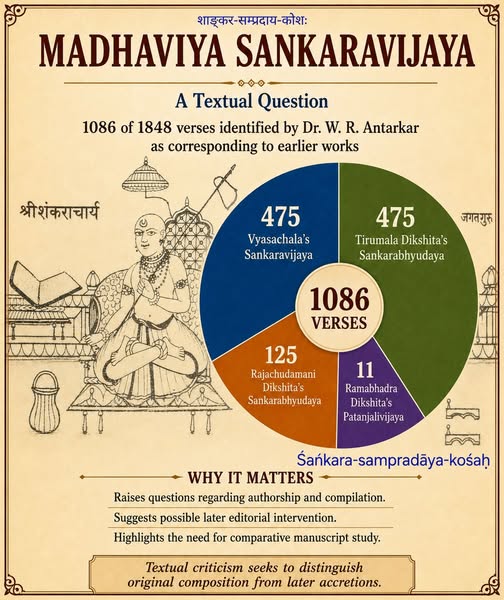
The Mādhavīya Śaṅkaravijaya is frequently cited as the principal authority for identifying Kedāra as the Siddhi-sthala of Śrī Śaṅkarācārya.
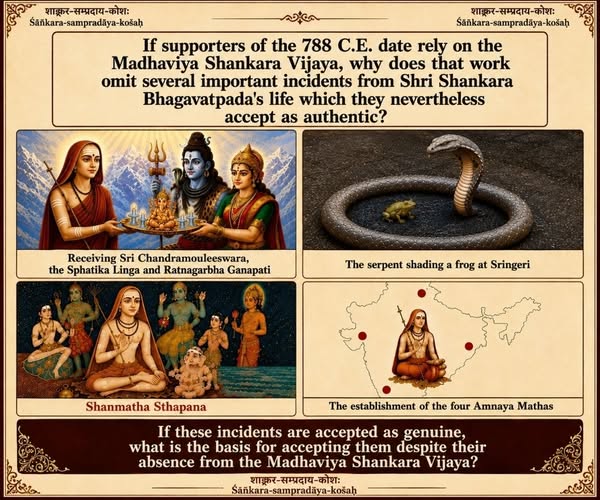
Yet, the same text does not narrate the establishment of the four Amnāya Maṭhas in the four corners of Bhārata.
The Verse 93, Canto XVI of the Mādhavīya Śaṅkaravijaya reads only as follows:
“इति मुनिरतितुष्टोध्युष्य सर्वज्ञपीठं
निजमतगुरुतायै नो पुनर्मानहेतोः।
कतिचन विनिवेश्याथर्ष्यशृङ्गाश्रमादौ
मुनिरथ बदरीं स प्राप कैश्चित्स्वशिष्यैः॥”
It mentions only one āśrama – Ṛṣyaśṛṅgāśrama, without identifying the disciple appointed there or even its precise location.
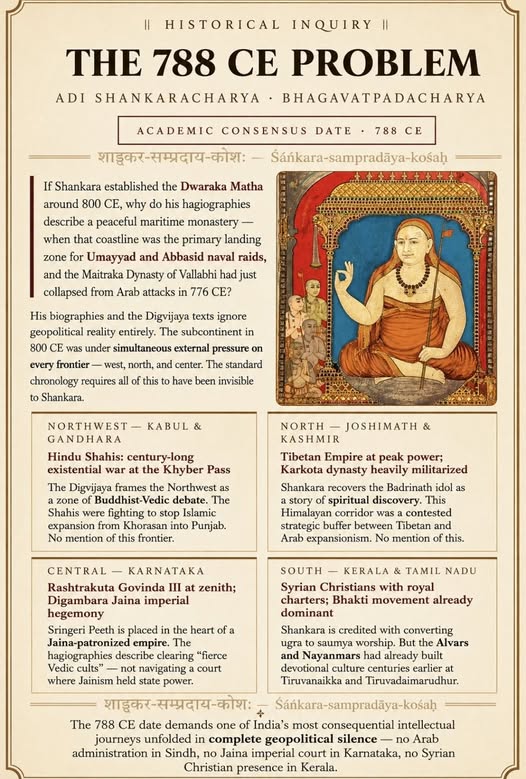
This poster highlights that textual silence and raises a simple question:
” If a work does not acknowledge the establishment of the four Amnāya Maṭhas, on what basis can it be treated as the primary authority for their later institutional tradition?”