Q: According to Anandagiri Shankaravijaya, Guruvamsa Kavya of Tunga Sringeri matha, and Kerala Tradition, How many Mathas did Shri Shankara Bhagavatpada establish? A: FIVE
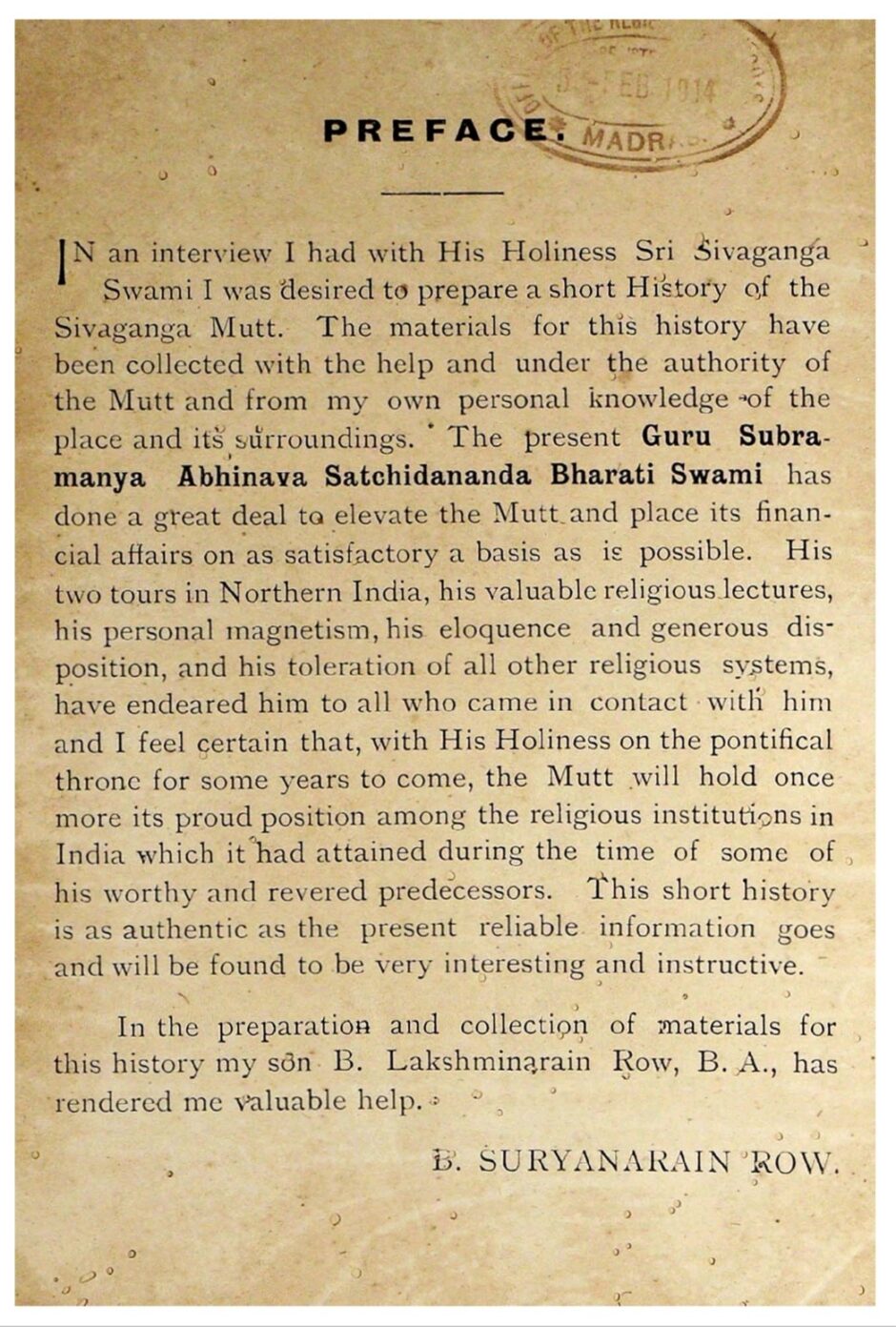
The Shivaganga Mutt’s brief history by B. Suryanarain Row is a rich compilation of the ancient history of Shivaganga kshrtra, Shri Adishankaracharya, the matha’s foundation & the lineage of Jagadguru Acharyas and traditional honours shown to this Sankarite institution by the Mysore Principality.
This 1914 publication not only explores the historical facets but also highlights the various privileges and special status enjoyed by the Shivaganga matha over the ages akin to the Sringeri matha founded by Sri Adishankara Bhagavatpada on the bank of Tungabhadra. The Mysore Government’s recognition, backed by precise legal and historical evidence, is meticulously examined by the author. This unique work dispels the misconception of considering the Shivaganga matha as a mere branch or shakha of the Tunga matha, providing clarity on its distinct identity and significance.
” ஸ்ரீஆதிசங்கரர் தமக்கெனக் காஞ்சியில் நிறுவிய “ஸ்ரீ காஞ்சி காமகோடி பீடம்” மிகத் தொன்மையாதாதலை 1916-இல் டி.ஏ.கோபிநாதராவ் பதிப்பித்த செப்பேடுகள் நிறுவும்…அம்பிகாபுரம் செப்பேடு ஸ்ரீமடத்தின் தொன்மையான செப்பேடாகும்.
இவ்வளவு தொன்மையான சான்றாதாரங்களை உடைய காஞ்சி மடமே குடந்தையுள் உறைந்தது என்பதையும் அவர்கள் ஆற்றிய சமய, சமுதாயப் பணிகளையும் சரஸ்வதி மகாலில் உள்ள மோடி என்னும் எழுத்து வகையால் எழுதப்பெற்ற பல நூறு மராட்டிய ஆவணங்கள் நிறுவுகின்றன…”
Why do contemporary historians ignore the tragic event of Pindari mercenaries destroying Kudali Sringeri Matha on December 17, 1790, and hide Tipu’s seizure of the four lakh compensation and fine money sent by the Mahratta Peshwa, to Kudali Sringeri Matha out of fear of excommunication for their wrongdoing?
Spiritual Jurisdiction and Official Recognition of Sri Kanchi Kamakoti Peetham: Chingleput Collector’s order (1839)
In the context of the Jagadguru Sri Kanchi Kamakoti Sankaracharya Swami’s spiritual jurisdiction over the Jambukeshwaram Devasthanam, the Trichinopoly Tahsildar referenced Chingleput Collector’s order no. 97/6 dated 25-2-1839.
This order specified procedures for the Kumbhabhishekam of Kanchipuram Sri Kamakshi Ambal Devasthanam, which was then under Government management following the relocation of the Kanchi Srimatha to Kumbhakonam.
In 1839, on the basis of the views and requests expressed by the general public, while reporting the Kanchipuram temple’s consecration necessity to the Chingleput Collector, the Kanchipuram Tahsildar prompted the Board of Revenue to release the required funds for carrying out the necessary renovation.
Recognizing the historical ties of Sri Kanchi Kamakoti Peetha with the Kanchi Devasthanam throughout the ages, the Chingleput District Collector immediately ordered the observance of proper formalities in a fitting manner to invite and receive the Kanchi Jagadguru (Sri Chandrasekharendra Saraswati Sankaracharya Swamigal, the 64th Acharya of Sri Kanchi Kamakoti Peetha) for renovating the temple, overseeing of the rituals, and conducting the consecration and immediate release of surplus funds of the Devasthanam from the District Board of Revenue for this purpose. (2/3)
Sri Kanchi Kamakoti Peetha: Tracing Its Spiritual Jurisdiction in Kanchipuram and Jambukeshwaram Through Government Documents from the British Period (Part-2)
Spiritual Jurisdiction and Official Recognition of Sri Kanchi Kamakoti Peetham: Chingleput Collector’s order (1839)
In the context of the Jagadguru Sri Kanchi Kamakoti Sankaracharya Swami’s spiritual jurisdiction over the Jambukeshwaram Devasthanam, the Trichinopoly Tahsildar referenced Chingleput Collector’s order no. 97/6 dated 25-2-1839.
This order specified procedures for the Kumbhabhishekam of Kanchipuram Sri Kamakshi Ambal Devasthanam, which was then under Government management following the relocation of the Kanchi Srimatha to Kumbhakonam.
In 1839, on the basis of the views and requests expressed by the general public, while reporting the Kanchipuram temple’s consecration necessity to the Chingleput Collector, the Kanchipuram Tahsildar prompted the Board of Revenue to release the required funds for carrying out the necessary renovation.
Recognizing the historical ties of Sri Kanchi Kamakoti Peetha with the Kanchi Devasthanam throughout the ages, the Chingleput District Collector immediately ordered the observance of proper formalities in a fitting manner to invite and receive the Kanchi Jagadguru (Sri Chandrasekharendra Saraswati Sankaracharya Swamigal, the 64th Acharya of Sri Kanchi Kamakoti Peetha) for renovating the temple, overseeing of the rituals, and conducting the consecration and immediate release of surplus funds of the Devasthanam from the District Board of Revenue for this purpose. (2/3)
Sri Kanchi Kamakoti Peetha: Tracing Its Spiritual Jurisdiction in Kanchipuram and Jambukeshwaram Through Government Documents from the British Period : Part-1
Introduction
The Spiritual legacy of Sri Kanchi Kamakoti Peetha established by Sri Shankara Bhagavatpadacharya in the Mokshapuri of Kanchipuram, a revered religious institution with deep historical roots, unfolds through a meticulous examination of the Government documents from the British period. This exploration primarily relies on the Report of the Tahsildar & Second Class Magistrate, Trichinopoly, dated 08.03.1908 (No. R.C.4686 of 1907) shedding light on the spiritual jurisdiction of the Jagadguru Shankarachaarya of Sri Kanchi Kamakoti Peetha in two of the Pancha-Bhuta kshetras of Southern India, Kanchipuram and Jambukeshwaram.
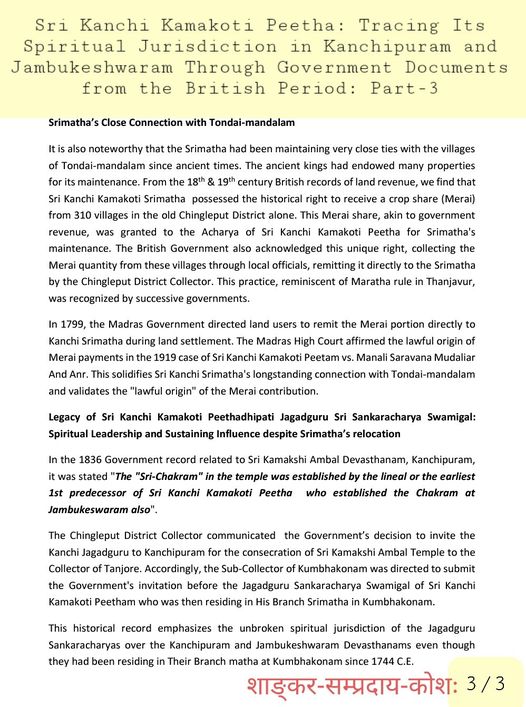
Srimatha’s Governance over Kanchipuram & Jambukeswaram Devasthanams : Overview of the Report from Tahsildar & Second class Magistrate (P.Dis. 516/1908)
This report was submitted to the Revenue Divisional Officer and Sub-Divisional Magistrate of Tiruchirapalli by the Tahsildar & Second Class Magistrate, shortly after the Kumbhabhishekam of Sri Jambukeshwara Swamy Devasthanam in Tiruvanaikovil, documented under P.Dis. 516/08 on 31.12.1908.
Valuable information elucidating the historical importance of Sri Kanchi Kamakoti Peetha, outlining its rights, honours, and official recognition in the sacred towns of Kanchipuram and Jambukeshwaram are found in this vintage document. (1/3)
In his article published by the Srirangam Vani Vilas Shankara Gurukulam Journal, Tinnavely Advocate R. Krishnaswamy Iyer, an adherent of the Tunga Matha, supported for 44 B.C.E as Shankaracharya’s birth year, in line with the Tunga Matha’s tradition.
Despite dismissing the traditional date favored by the Kanchi, Puri, Dwaraka and Jyotir mathas and date suggested by the Western scholars (509 B.C.E and 788 C.E), the Tunga Matha later shifted its stance and adopted the 788 C.E date.
What factors influenced this change from supporting 44 B.C.E to accepting 788 C.E as Shri Shankaracharya’s birth year?
The transition in the Tunga Matha’s position raises questions about the specific influences behind this shift from their initial stand for 44 B.C.E to eventually adopting the 788 C.E date, marking the period post the birth of Jesus Christ.
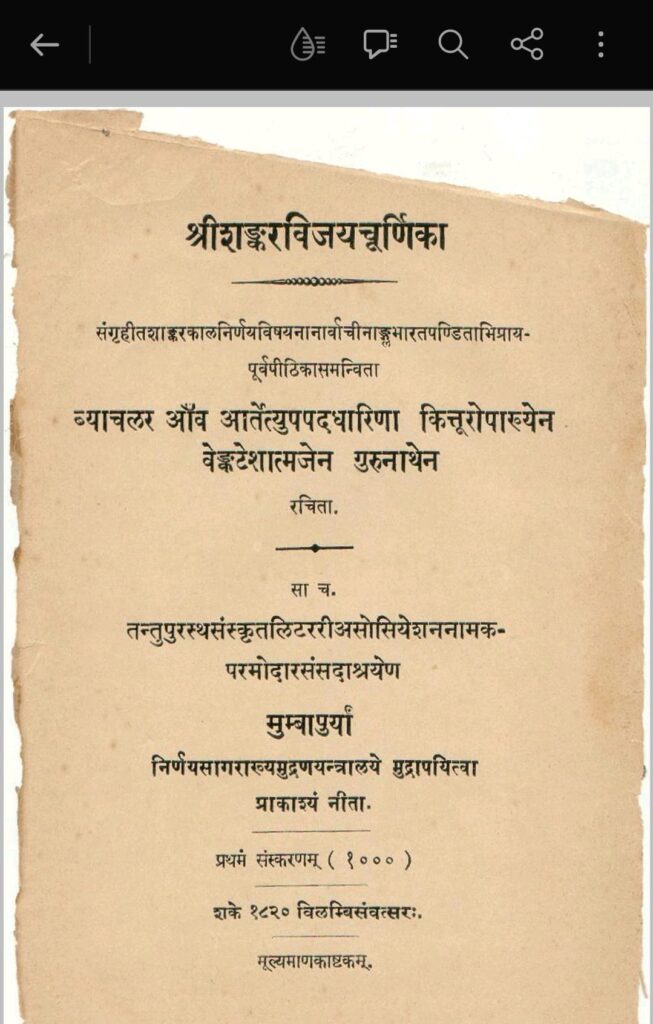
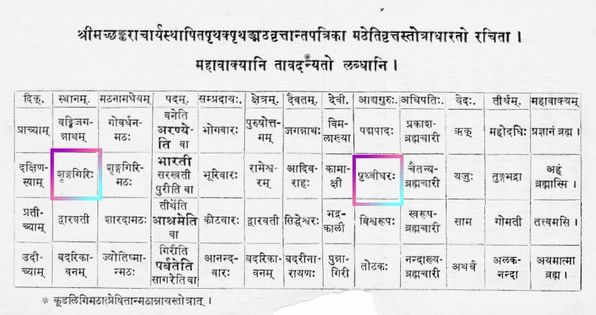
A: Shri Prithvidharacharya’s anointment as the first Acharya of the Dakshinamnaya Sringeri Matha, which was established at the confluence of Tunga and bhadra rivers is evident in texts such as Mathamnaya, Guruparampara of Bharati Sampradaya, and Shankaravijaya Churnika (Purva-pithika)