Meeting Place of Adi Shankaracharya and His guru Govinda Bhagavatpada – Variations within the Tunga tradition.

Within the Tunga Sringeri tradition, there are variations in the location of Govinda Muni’s ashrama, as documented in different texts:

Chidvilasa’s Sankara Vijaya mentions Ratnagarbha Ganapati who is worshipped in Tunga, the ashrama of Vibhandaka Muni, a detailed description of Sringeri, the establishment of four peethas and Bhagavatpada’s ascent of Sarvajna Pitha in Kanchipuram and can be understood as the work that upholds the Tunga tradition.

However, this work curiously places Govinda Muni’s ashrama in Badarikashrama in the Himalayas and has the following description of Govinda Bhagavatpada shining like the Sun with Rudraksha mala.

अन्विष्य शङ्कराचार्यः सर्वत्र जगतीतले ।

क्रमेण बदरीं प्राप यत्र विष्णुस्तपस्यति ॥ ३८ ॥

बदर्यो भूरुहो यत्र फलन्ति स्वर्दुमा इव ।

तत्रैकत्र समासीनमुटजाभ्यन्तराङ्गणे ।। ४३ ।।

ध्यायन्तं परमेशानं व्याघ्रकृत्तिकृतासनम् ।

भूत्युद्भासितसर्वाङ्गं पौण्डरीकोत्तरच्छदम् ।। ४४ ।

रुद्राक्षमालिकाजालसमाकलितविग्रहम् ।

निस्तरङ्गमिवाम्भोधिं निर्विकारमिवाशुगम् ।। ४५ ।।

निस्तमस्कमिवादित्यं भास्वन्तमिव पावकम् ।

गोविन्दभगवत्पाददेशिकेन्द्रमलक्षयत् ।।४६ ।।

In a stark departure from Chidvilasiya, the Madhaviya Sankaravijaya mentions that meeting of Bhagavatpada with His guru Govinda Bhagavatpada happened on the banks of “Indubhava”.

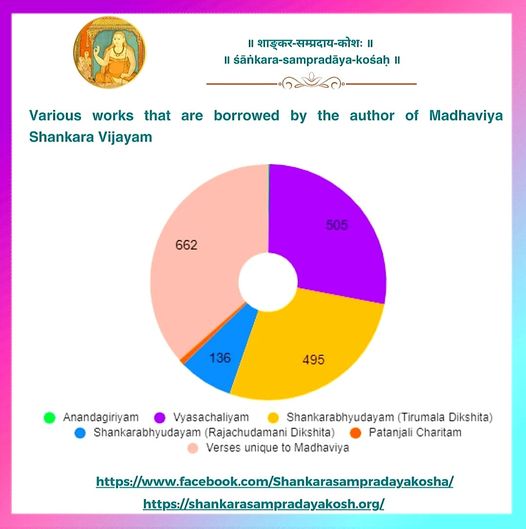
Given that Chidvilasiya is of relatively older antiquity than Madhaviya, and Madhaviya is a sangraha of many texts from Vyasachaliya to Shankarabhyudaya, one has to wonder what source of Madhaviya Shankara Vijaya is for mentioning Narmada as the meeting place.

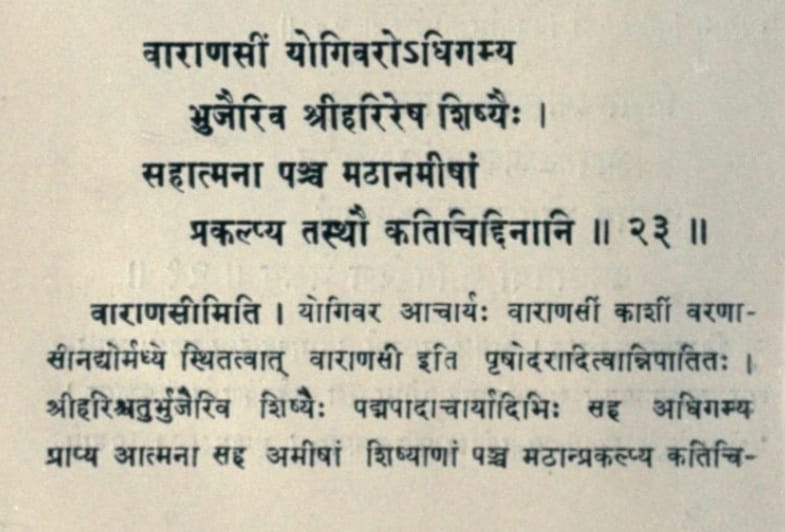
दण्डान्वितेन धृतरागनवाम्बरेण गोविन्दनाथवनमिन्दुभवातटस्थम् ।

तेन प्रविष्टमजनिष्ट दिनावसाने चण्डत्विषा च शिखरं चरमाचलस्य ॥ ११ ॥

Madhaviya Shankara Vijaya uses the newly coined term “Indubhava” for River Narmada based on the traditional name “Somodbhava” replacing “Soma” with “Indu”. It is from the commentaries of Madhaviaya such as Advaitarajyalakshmi quoting Dindima that we know this.

It may also be noted here that Gururatnamala of Sadashivendra Sarasvati mentions “uparevam” situated near Reva nadi both in the stuti on Govinda Bhagavatpada and also mentions the word “pratichandrabhavam” similar to indubhava usage of Madhaviya when talking of where Shankara Bhagavatpada met Govinda Bhagavatpada. Likewise Tirumala Dikshita’s Shankarabhyudaya also mentions Narmada Tiram as the Place of Their meeting.

Given the wide extraction of many verses from Tirumala Dikshita’s work in Madhaviya, there is a likelihood that these works may have been a source for Navakalidasa Madhava, the author of the 18th-19th century Samkshepa Shankarajaya (Shankara Digvijaya) in its departure from Chidvilasiya Sankaravijaya. .

Curiously, Tunga Sringeri Matha’s Guruvamsa Kavya does not mention the location Govinda Muni’s ashrama.

The disparity between the Guruvamsa kavya and the Madhaviya Sankara vijaya and Chidvilasiya Sankaravijaya becomes a perplexing puzzle. It leaves room for speculation that either these two Sankara vijayas were not in existence when Guruvamsa kavya was written, or the Tunga Sringeri adherents were unaware of their existence when guiding the composition of Guruvamsa kavya.

“सम्प्रदायो हि नान्योऽस्ति शङ्कराद्बहिः”

“सम्प्रदायो हि नान्योऽस्ति शङ्कराद्बहिः”

From the preface of Paramapujyashri 108 Mahant Gangapuriji Maharaj, Sangameshvar Mahadev, Kurukshetra in the book “Prapancasara tantre – Shankaracharyah tantrika sadhana” by Dr. Ramachandra Puri Professor of Lajpat Rai Ghaziabad.

Shri Vidyaranya Yati in His tantrika work Srividyarnava Tantra worships Shankaracharya among the acharyas of tantrika sampradaya and says that tantrika sampradaya is not outside the Sampradaya of Shri Shankarachara.

From the standpoint of philosophical thought Acharya was an advaitin. However Shankara the sadhaka was an upasaka of Bhagavati.

The Shrividya sadhana set forth by Shankaracharya is still prevalent among many renunciate sannyasis. Sanyasis are lokasangrahis and they perform the necessary aadhyatmika, adhibhautika and adhidaivika sadhana for the benefit of this world. These sadhanas are elaborated upon by Bhagavatpada in the Prapanchasara. He was as much a lokasangrahi as he was a paramarthadarshi. He spoke of the fourth tattva moksha but did not ignore dharma artha and kama for these are essential steps in the ascent towards moksha.

Brahmibhava of Bhagavatpada – N.S.Ananthakrishna Shastri

Vidvan Shri. N.S.Ananthakrishna Shastri in the appendix to the edition of Brahmasiddhi – Bhavashuddhi and Abhiprayaprakashika of Chitsukhacharya, published in 1963 says the following about the Siddhisthala of Shri Adi Shankara Bhagavatpadacharya.

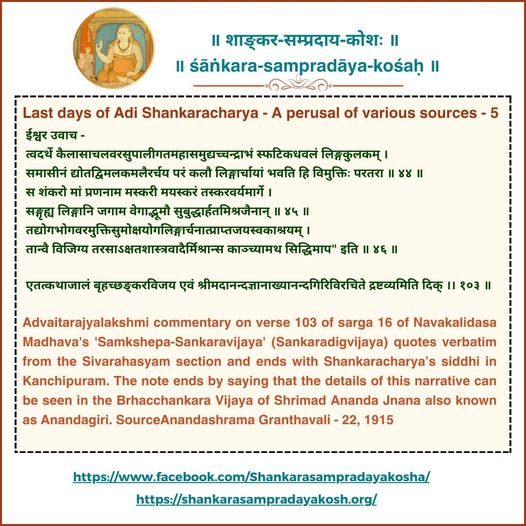
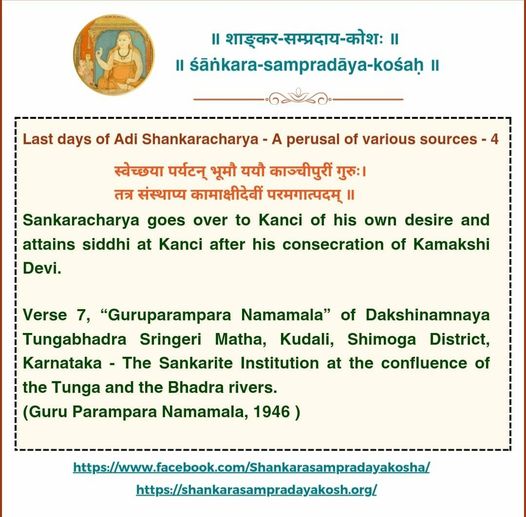
There is no conflict or virodha between taking the brahmibhava of Shri Shankara bhagavatpada in Kanchipuram after the anointment of Shri Sureshvaracharya (with what is said in the Madhaviya).

In the Madhaviya Shankara Vijaya, Shri Bhagavatpada who came from Badarikashrama, after His avatara karya, returning to Kailasa, the prayer of the Devatas pray to Him. In the Anantanandagiri Shankara Vijaya, the brahmibhavam in Kanchipuram is described. Due to this – in one place we have the ascent to Kailasa in one and in another the aikya in Kanchipuram itself is said. This may seem like a conflict.

According to what is said in Brahmasutra,

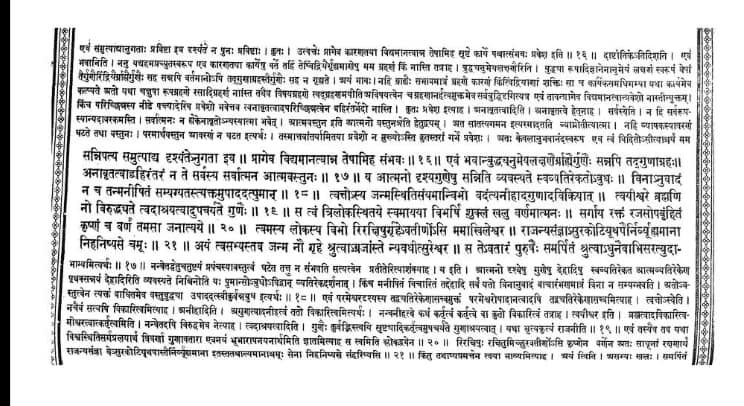
“कारणत्वेन चाकाशादिषु यथाव्यपदिषोक्तेः” (Although there is a conflict of the Vedanta texts as regards the things created such as ether and so on, there is no such conflict with respect to Brahman as the First Cause, on account of being represented in one text as described in other texts). Likewise, the merging with the akasha in one and the merging of tejas and others elsewhere – as explained in the बस्तुख्यातिविघातिवादितिमिरं नैष्कर्म्य सिद्धिस्फुट- व्याख्याचन्द्रिकया विधूय सुधियां सद्दृष्टिमुन्मीलयन् । अन्तः संभृतशान्तवेदनसुघोहयोतः समुद्दद्योतते – सर्वज्ञाश्रमचन्द्रमा त्रिजगतीसर्वज्ञचूडामणिः ॥creation.

There even if there is an appearance of conflict, “The creation of Aksha and Vayu and then Tejas and others” – is resolved by this sequence.

Likewise, how is saying that from Badarikashrama, coming to Kanchi, Bhagavatapada attained aikyam be a conflict? Even now, great sannyasis, when they are in another grama accept the prarthana of devotees to come to one’s grama, and in between stay for a few years in the middle in various places and then arrive there? This being the case how does the stay in between make the final destination invalid?

It is not known whose work Chidvilasiya Shankara Vijaya in the form of a dialogue between Vignanakanda and Chidvilasa in the course of Shankara Vijaya Vilasa is. Therefore it has to be taken as a lesser pramanam than the Shankara Vijayam of Anantanandagiri. However since it is said there also that Sarvajnapitham is in Kanchi, and Shri Bhagavatpada ascended the SarvajnaPitha is said there as well, it is clear that Kanchi Pitham is Sarvajnapitham of Shri Bhagavatpada.

Sri Vidyatirtha

Sri Vidyatirtha, the 51st Acharya of Sri Kanchi Kamakoti Peetha is also revered as Sri Vidyasankara, in the Guruparampara records of the Tungabhadra (Kudali) Sringeri and other Advaita mathas of Karnataka . Sri Vidyatirtha’s greatness is undeniable, especially if we consider that the Vijayanagara kingdom was influenced by his glance from Bukka. Born in Bilvaranya, Sri Vidyatirtha was the son of Sarangapani and lived from 1296 to 1384. He spent seventy-three years in Kanchi, practiced penance for fifteen years near the Himalayas. He also revitalized the Sankarite institutions of Karnataka.

In the book “Founders of Vijayanagara,” published by the Mythic Society in Bangalore in 1938, the distinguished historian of Mysore State, S.Srikantayya, expresses his perspectives regarding the association between Sri Vidyatirtha (also known as Sri Vidyasankara) and the Vijayanagara empire.

Tracing Tamil Brahmin Migration : Sankarite Institutions, Sri Vidyatirtha, and Settlements in Mysore’s History

The Historical survey records published by the Mysore Government provide fascinating insights into the migration and settlement of Tamil Brahmins from Tanjore and Kanchipuram regions, near the Sankarite institutions on the Tunga and Tungabhadra rivers (Tunga Sringeri and Tungabhadra -Koodali Sringeri mathas).

In the Quarterly journal of the Mythic Society, while reviewing the 1931 Annual Report of the Archaeological Survey of Mysore, there is an interesting observation that Sri Vidyatirtha also hailed from the Tamil Brahmin community of Choladesa (Tanjore) in his earlier life.

“… Hale Sringeri Village is about two furlongs to the west of Sringeri with about one Brahman and twenty other houses. A small mud shrine contains the old Vidyasankara Linga, about six feet high. The Vidyasankara image is 1½ ft. high in Yoga-mudra with a sannyasi disciple on either side. Compared with this, it will be clear that the image to which I have referred in my article on “An Ancient Image at Hampi ” may not be that of Vidyasankara.

In his notes on Vidyaranyapura, Dr. Krishna says that “Vidyaranya also must have been a Karnataka (Kannadiga). But Vidyasankara is said to have been a ‘choli’ (belonging to the Chola-desa of Tamilnadu) since some ‘cholis’ (Tamil Brahmins from Chola desa) have set up his image in the Agrahara.”

This statement is evidently traditional, picked up during the course of enquiries but it deserves further investigation…”

The authenticity of this statement is supported by the ancient Guruparampara records of Sri Kanchi Kamakoti Peetha. These records state that Sri Vidyatirtha, the 51st Acharya of Sri Kanchi Matha, originated from Bilvaranya kshetra of the Chola desa. His successor, Sri Sankarananda, the 52nd Acharya hailed from Madhyarjuna kshetra (Tiruvidaimaruthur) in the Chola country.

(Reviews : Archaeological Survey of Mysore – Annual Report for 1931 – The Quarterly Journal of the Mythic Society.)

Durvasapura Mutt

Durvasapuram is located at a distance of about 2 miles from Tirthahalli. It is on the bank of the Tunga river. There is a small island (dvipa) in the middle of the Tunga, called Durvasasrama. This place is situated at a distance of 36 miles from the source of the Tunga. According to the sthala-mahatmya, while the Pandavas were staying here, the water of the river, did not flow downwards, because Bhima had constructed a dam (Bhima-setu) there. Seeing this Durvasa wanted to curse Bhima, Bhima then made three openings in the dam through which the water flowed down. Bhima installed a murti of Sive (Bhimeswara) there. It is said that those who have darshan of Bhimesvara, Siddhesvara installed on the Siddhesvara hillock and Ramesvara installed at Tirthahalli by Parasurama will not be born again.

आदौ भीमेश्वरं दृष्ट्वा मध्ये सिद्धेश्वरं तथा । अन्ते रामेश्वरं दृष्ट्वा पुनर्जन्म न विद्यते ॥

One of the acharyas of the Dwaraka Peetha removed himself to Malabhagalu situated to the North of the present Kolar. During the time of Sivappa and Bhimappa Naik of Bidanur, the then Acharya of Dwaraka (Mulabhagalu) Matha was invited to the Durvasapura. He accordingly visited the place and had a Matha constructed there. The principal deity worshipped in the temple is Sri Gopalakrishna. There are also murtis of Sri Chandramaulisvara Swamy and Sri Gayatri Devi.

(Original Article: Written by Sri Anantanandendra Swami of Upanishad Brahmendra Matha – Published by Prof.S.Soundararajan,Bangalore)

Guruparampara of the Bharati line of Sanyasins

Dr. Hultzch in his Report on the Search for Sanskrit Manuscripts in Southern India, Part II printed by the Government Press, Madras, 1905, refers to a Guruparampara of the Bharati line of Sanyasins and gives the Guru Parampara Vide No. 21461.

This manuscript was also found in the collection of the manuscripts made by a Pandit of the Tanjore Palace. This list gives the names of 30 Acharyas.

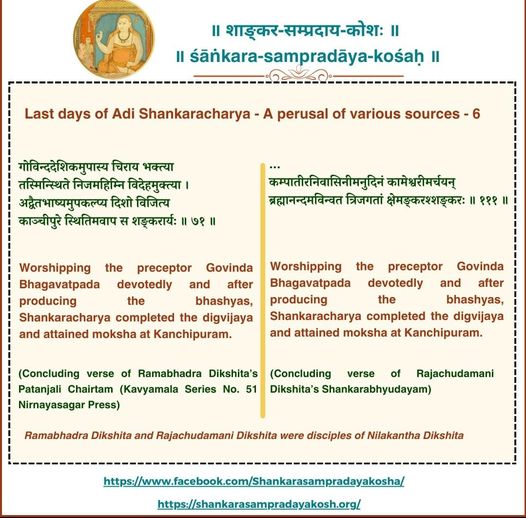
According to this Guruparampara Stotra, Sri Sankaracharya established a matha at the Tungabhadra (Kudali) sangama kshetra and anointed Sri Prithvidhara Bharati as its first Acharya. Later, Sri Sankaracharya visited Kanchi where He consecrated Sri Kamakshi Devi and attained the final Bliss.

Sri Sacchidananda Saraswati of Hole Narasipur in his Sri Sankara Bhagavatpada Vrithantha Sarvaswa raised a doubt about the 5th & 6th verses and that their reliability would be clear if it was known who the author of this Guruparampara stotra was.

It is surprising, an erudite scholar like Sri Sactchidananda Saraswati didn’t know the fact that even before Dr.Hultzh, this Guruparampara list was noticed by K.B.Pathak of Belgaum in 1882. According to him Atmananda was the author of this Guruparampara list.

Here’s an Excerpt from K.B. Pathak’s article published in the Indian Antiquary journal:

“I have lately come across a manuscript which gives the date of Samkaracharya. The manuscript belongs to Mr. Govinda Bhata Yerlekara of Belgaum. It is a small one, consisting of three leaves only, written in Balbodh characters.

It begins thus :

श्री त्र्यंबकेश्वरायनमः

नमामि शंकराचार्यगुरुपादसरोरुहं ।
यस्य प्रसादान्मूढोपि सर्वज्ञोऽहं सदास्म्यलं॥
श्रीशंकराचार्यनवावतारं वेदान्तशारीरकभाष्यकारं।
चकोरचाकोरकचंद्रिकाणां श्रीशंकराचार्यगुरुं नमामि॥
आदौ शिवस्ततो विष्णुस्ततो ब्रह्मा ततः परं।
वसिष्ठाख्यस्तथा शक्तिस्तत: पाराशरः स्मृतः॥
ततो व्यासः शुकः पश्चाद् गौडपादाभिधस्तथा।
गोविंदार्यगुरुस्तस्मात् शंकराचार्यसंज्ञकः॥

The manuscript next says that Samkara established his matha on the banks of the Tumgabhadra, appointed Prithvidhara to be the head of it, conferred upon him the title of Bharati, and,

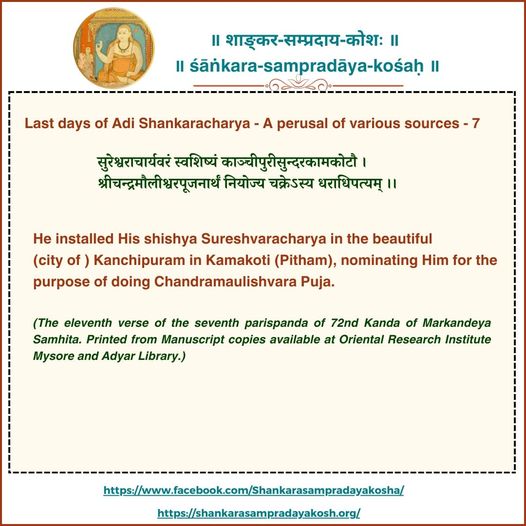
आगत्य स्वेच्छया कांचीं पर्यटन्पृथिवीतले ।

तत्र संस्थाप्य कामाक्षीं जगाम परमं पदं ॥

Then follow the names of his successors. We next come to a minute description of the mathas established in various parts of India. Then follows the guru parampara or the succession of teachers…”

– K.B.Pathak, B.A. Belgaum High School (June,1882)

Royal Elephant Offerings to Kanchi and Sringeri (Kudali) Shankaracharyas

In the historical epistles dating back to the 18th and 19th centuries, we find accounts of the Travancore kings presenting elephants named “Padmanabha” as offerings to the revered Jagadguru Shankaracharyas of Shri Kanchi Kamakoti Peetham.

Additionally, in the records of the Mysore State Government for the year 1941-42, there are detailed entries of the government offering two elephant calves to Shri Kanchi Kamakoti Peetham Jagadguru Shri Shankaracharya Swamigal Srimatham Samsthanam and Jagadguru Shri Sringeri (Tungabhadra-Kudali) Shankaracharya Swamigalavaru Srimatham Samsthanam as a humble contribution.

Tungabhadra Sringeri (Kudali) matha established by Jagadguru Shri Shankara Bhagavatpadacharya

In the Bhumika of the book Sareeraka Meemamsa Bhashyam printed and published by Venkateswara Steam Press, Bombay, written by Mahavidvan Kashi Sesha Venkatachala Shastri, son of Pandita Dharmadhikari Shri Venkatasubramania Shastri and grand son of Pandita Dharmadhikari Kashi Sesha Nageshwara Shastri of Mysore, the following observation was made in Sanskrit about the Tungabhadra Sringeri (Kudali) matha established by Jagadguru Shri Shankara Bhagavatpadacharya.

” अन्यस्मै पुस्तकसन्न्यासाश्रमं ददुः, ततः केषुचिद्दिवसेषु व्यतीतेषूक्तः स्वामी ( = यात्रां गतः स्वामी देशयात्रातः प्रतिनिवृत्य) कूडलीमागत्यैनं वृत्तान्तं ( = महाजनैः शृङ्गेरीमठीय पीठाधिपत्ये स्थापितस्यान्यस्य सन्यासिनो वृत्तान्तं श्रुत्वा राज्यस्थाने (हुजूरास) लेखनस्य निवेदनात्पक्षद्वयमपि तेषामाह्वापनद्वारा विचारितम् । तेन चास्माभिस्तत्रत्यैर्महाजनैर्हठेन दत्तः पुस्तकसंन्यासः सत्यः इत्यवगतम् । तथाप्युपदेशसन्न्यासादिकमनेन देयं, पुस्तकसन्न्यासिभिस्तु ग्रामे (शृङ्गेरीग्रामे) एव स्थित्वा श्रीशारदामातृपूजां कुर्वद्भिर्मठे नियमनिष्ठ्या स्थातव्यं शङ्कराचार्यपरम्परागतैः स्वामिभिः देशसंचारादिकं कुर्वद्भिः कूडल्यां (लग्यां) स्थातव्यम्” इति । इदं (प्राचीन लेख – पुस्तक – राजशासन – पत्रिकालेखाद्यनुरोधेन शशिशेखर दामोदरसङ्केश्वरीय विद्याशालाया अध्यापकेन लिखिते ) “श्रीसंस्थानसङ्केश्वर मठ करवीर व सङ्केश्वरचा इतिहास इति नाम्ना प्रसिद्ध मुद्रितपुस्तके स्पष्टम् |”

Note: That this (Tungabhadra Sringeri) Matha was an independent Matha and that it was entitled to use Addapallaki and other paraphernelia was held in Appeal No.22 of 1847 on the file of the court of Huzur Adalat, Mysore. This order was confirmed by the Commissioner of Mysore, by his order dated 1st June, 1849. In the judgment it has also been quoted that “the Parwana of the Phalguna Bahula, 6 of the year Krodhana is to the effect that the (Tungabhadra Sringeri) Kūḍali Swami should always be on tour and that the (Tunga) Sringeri Swami should ever remain at Sringeri worshipping the deity.”- ‘Extract from the Judgement in Appeal No.22 of 1847 in the Court of the Huzur Adalat, Mysore’.- Sri Sankaracharya And Sankarite institutions by Sri Anantanandendra Saraswati of Upanishad Brahmendra Matha.