Avani Matha Succession

The Mysore Government adopted a systematic approach to select a qualified successor to the Avani Peetham from its eligible disciples, strictly in line with the ancient traditions and customs of the Matha and in accordance with the Rules of the Muzrai Department governing succession.

Upon selection, the new Swamigalu was provided advanced religious education and training similar to the arrangements made for the young Swami of the Shivaganga Matha.

A committee of scholars and eminent persons periodically visited the Matha to observe his progress, and the Government further sought the guidance of Mahamahopadyaya Shri Virupaksha Shastri to assess and advise on his training.

This stands as a classic instance of the Maharaja of Mysore discharging his paramount duty to protect an ancient Matha and its parampara, without outsourcing the same to any other external denomination.

Save Mathas from Takeover

Historical records show that the Kudali Sringeri, Shivaganga, Avani and Hariharapura mathas are independent religious institutions and not branches of any other matha. The unique traditions, religious practices and denominational autonomy of the ancient advaitic religious institutions of Southern India should not be overridden by the mere nomination of a successor or otherwise by another matha. Those who attempt to usurp or interfere with their autonomy by any of these modes should know that corporate-style mergers, acquisitions and takeover have no place here.

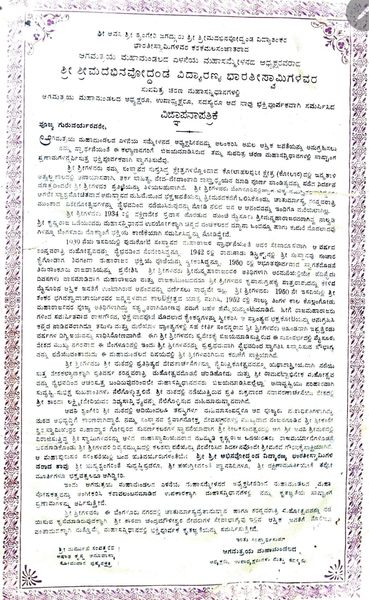
Sri Avani Sringeri Matha – Vijnapana Patrika

Sri Avani Sringeri Matha,

Avani Kolahalapuri Kshetra

Sri Abhinavoddanda Vidyashankara Bharati Swami

Date of Birth: 01-11-1908

Date of Sanyasashrama : 02-05-1928

Date of Nirvana: 28-06-1985

Image Vijnapana Patrika submitted to Sri Abhinavoddanda Vidyashankara Bharathi Swami of Sri Avani Sringeri Matha, who presided over the Seventh Sammelana of the Agama-Traya Mahamandala by the Adyaksha, upa-adyaksha and participants on August 22, 1956 in Bangalore.
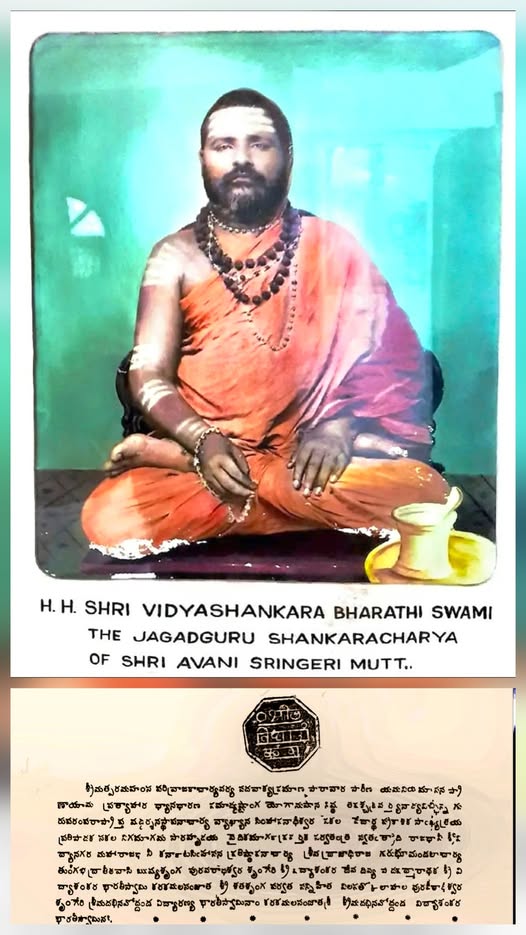
//… Śrī śrīgaḷavaru nam’ma sansthānada suprasid’dha kṣētragaḷallondāda kōlāhalapurī kṣētra (kōlāra) dalli janmatāḷi atyalpa kāladalli, anāyāsavāgi, tarka sāhitya, vēda vēdāntādi śāstrādhyayana māḍi pūrṇa pāṇḍityavannu paḍeda nidarśana mātradindalē śrī śrīgaḷavara pratibheyannu tiḷiyabahudāgide. Śrī śrīgaḷavaru beṅgaḷūrinalliddāga cikka nam’ma naravāgiddara āgalē svāśramōcitavāda anuṣṭhānada mahimeyinda bhaktajanateyannu śrīmaṭhada kaḍege olisikoṇḍu, cāturmāsya, śarannavarātri muntāda viśēṣōtsavagaḷannu vaibhavadinda naḍeyisiruvudannu nōḍi nalida jana ā ānandavannu indigū mareyalāgilla.

Śrī śrīgaḷavaru 1934 ralli dakṣiṇadēśa pravāsa horaḍuva mun̄ce maisūru śrīmanmahārājaravarāgidda nālvaḍi śrī kr̥ṣṇarāja oḍeyaravaru mahāsannidhānada upayōgakkāgi cinnada pan̄cakalaśada myānā ondannū hāgu kudure modalādavu gaḷannū beṅgaḷūru mokkāṅge bhaktiya kāṇikeyāgi samarpisiddannu nōḍiddēve

Avani śr̥ṅgēri śrī maṭhadalli ādiyindalū tapasvigaḷū mahimāsampannarū āda pūjyaru maṭhādhipatigaḷāgiddu maṭhada abhivr̥d’dhige kāraṇarāgiddāre. Nam’ma sansthānada śaivāgamōkta dēvasthānagaḷalli mukhyavāda nan̄janagūḍina śrī śrīkaṇṭhē śvara svāmiyavara mahādvāra gōpurada suvarṇakalaśagaḷa sthāpaneyādāga śrī kīlaka sanvatsaradalli’āga śrī āvani śrīmaṭhadalli virājisuttidda śrī svāmigaḷavarannu āḷida mahāsvāmiyavarāda mum’maḍi kr̥ṣṇarāja oḍeyaravaru rājamaryādegaḷoḍane baramāḍikoṇḍu śrī śrīgaḷavara divya sam’mukhadalli kalaśasthāpaneyannu neravērisida nidarśanavondē śrīmaṭhada gauravakke sākṣiyāgide.

Ā mahāpuruṣara parampareyalli banda yativaryarugaḷanteyē śrī śrī abhinavōdaṇḍa vidyāraṇya bhāratīsvāmigaḷa varāda tāvu śrī r̥ṣyaśr̥ṅgarante suvr̥ṣṭi pradarū, śrī hayagrīvarante jñānanidhigaḷū, śrī dakṣiṇāmūrtiyante tappō mūrtigaḷū bhaktavatsalarū āgiddīri….//