25th March 44 B.C : The Birth Date of Sri Sankara Bhagavadpadacharya

25th March 44 B.C : The Birth Date of Sri Sankara Bhagavadpadacharya

Shri B.V.Raman in his book “Notable Horoscopes” has given a categorical statement that the 25th March 44 B.C was the Date of Birth Sri Sankara Bhagavadpadacharya . This according to him was on the basis of the reliable old records (Guruparampara patti) preserved in the Sankarite institution of Karnataka.

In the foot notes to his article on the subject, he says, “A learned Indian scholar who has written a book entitled Life and Teachings of Sankaracharya says that “in all this confusion of evidence it is safe to assume that Sankara flourished some time between the middle of the seventh and the first quarter of the ninth centuries”.

On what grounds he has come to this conclusion has not been made clear. There is no doubt confusion prevails regarding the year of Sankara’s birth but much of it could have been avoided if some of these scholars had taken the trouble to carefully examine all the relevant literature bearing on Sankara’s life and times, free from any prepossessions which are a concomitant of Western education.

A careful study of such authorities as Sankaravijayas of Madhavacharya, Anandagiri and Chidvilasa, Punya-sloka Manjari and the Guru Parampara list preserved in Sringeri Mutt reveals that Sankara was born definitely before Christ and not in the 7th or 8th century A.D. as oriental scholars-Indian and European-have made out.

It looks as though these scholars have confused Adi Sankara with his name-sake Abhinava Sankara who was the Guru of Kamakoti- peetha and the 36th in succession to Adi Sankara.

This Abhinava Sankara, a very learned and pious man, was born in 788 A.D. in the cyclic year Vibhava, solar month Vrishabha, on the 10th day of the bright half. It is said that like Adi Sankara this Abhinava Sankara also toured all over India, held discussions with learned men and conquered them intellec-tually. He died in A.D. 839.

Almost all authorities are unanimous that Adi Sankara was born on Vaisakha Suddha Panchami, at midday.

Suklapaksheshu panchamyam tithyam bhaskaravasave:

Madhyanhechobhijinnama muhurta subha veekshate.

As regards the year, Sukhacharya’s Brihat Sankara Vijaya and Chid- vilasa’s Sankara Vijaya make it clear that Sankara’s birth took place in Kaliyuga 2593, Sunday, Vaisakha Sukla Panchami, in Punarvasu nakshatra, at midday, when the Sun was in Aries, the Moon in Punarvasu last quarter and when Jupiter, Saturn and Mars were in kendras, exalted or in own house, Venus was exalted and Mercury was with the Sun. This date corresponds to 3rd April 509 B.C., the weekday being Monday. Un- fortunately except in regard to the Sun and Mercury, the positions of other planets (the Sun 20°; the Moon 71° 42′; Mars 252° 18′; Mercury 7° 6′ ; Jupiter 225° 30′; Venus 37° 18′; Saturn 338° 12′; and Rahu 41° 18′) do not tally with those suggested in the authorities.

As Prof. B. Suryanarain Rao says: “According to the records of Sringeri Mutt (Guru Parampara Patti) which are well preserved and reliable”, Sankara was born on the 5th day of the bright half of the lunar month of Vaisakha of the cyclic year Eswara in Vikrama 14. This corresponds to 25th March 44 B.C.

I am inclined to give greater weight to the reliability of this date as it is given in the lists preserved by the Gurus of Sringeri, and consequently, there was no chance of their having been tampered with.

Sankara’s Guru was Govindapada, who is said to have begotten by his Kshatriya wife, the great Vikramaditya. Sankara must therefore have lived about the time of Vikramaditya.”

Images: Temple at Tiruvaikavur – Bilvaranya

Images: Temple at Tiruvaikavur – Bilvaranya (the Birth-place of Sri Vidyateertha Swami, the 51st Peethadhipati of Sri Kanchi Kamakoti Peetha) near Kumbakonam. After reigning at the Kanchi Sri Kamakoti Peetha for 73 years, this Acharya went to Himalayas to perform tapas. After spending 15 years in tapas Sri Vidyatirtha Swami attained videha mukti there.

படங்கள்: கும்பகோணத்திற்கருகிலுள்ள ஸ்ரீகாஞ்சீ காமகோடி பீடம் 51வது ஆசார்யர் ஸ்ரீவித்யாதீர்த்த ஸ்வாமிகள் அவர்களின் ஜன்ம ஸ்தானமான வில்வாரண்யம் எனப்படும் திருவைகாவூரிலுள்ள கோயில். ஸ்ரீகாஞ்சீ காமகோடி பீடத்தின் ஜகத்குரு ஆசார்யாள் அவர்களாக 73 ஆண்டுகள் அருளாட்சி செய்த இந்த அருளாளர் ஹிமாலயம் சென்று 15ஆண்டுகள் தவம் செய்து நிறைவாக அங்கேயே விதேஹகைவல்யம் அடைந்தனர் என்பது வரலாறு.

Inferable Link of Bhagavatpada Sankaracharya with Kumbhakonam – A.Kuppuswamy Iyer (2/3)

Migration of Tamilians to Kerala

It is believed that Parasurama after his surrender to Rama, prince of Ayodhya, came down to the South and was instrumental in colonising the Kerala region with Tamilians.

It seems quite probable that another migration of Tamilians to Kerala did take place in the middle of the first millenium before Christ. Even now there are some villages around Tiruchur and Kaladi with names similar to those of certain villages near Sivapuram. Some of these are:- Mathur, Sedinipuram, Chandrasekharapuram, Karukkudy (Marudanallur-called in Kerala ‘Karukkurry’.”). Names of places such as Alathur, Tiruvaloor ( Tiruvarur), Tiruvangad (Tiruvenkadu) are also found in the Chera country. There as is also a place called ‘Kandiyur’ in Kerala. Kandiyur is the name of a village about 20 miles west of Kumbhakonam.

It is evident that the very name ‘Kaladi’ given to Sankara’s birth place is a Tamil name. Perhaps the place got the name ‘Kaladi’ after the advent of Sankara. Sankara is also known by the epithet ‘Bhagavatpada’. ‘Pada’ signifies ‘foot’ and ‘Kaladi’ means ‘footstep’.

Ancient literary works like the ‘Sivarahasya’ indicate that Sankara was born in a village known as ‘Sasalagrama’.

Hence it can be concluded that ‘Kaladi’ is a Tamil name and a later name. Sivaguru, Sankara’s father was a native of Kaladi. Perhaps Sivaguru’s parents gave their only child the name ‘Sivaguru’ after the name of the Lord of Sivapuram (near Kumbhakonam) which might have been the ancestral home of their forebears.

That settlers in new lands generally named their new colonies after their original native places is borne out by history. Protestant emigrants to the coasts of North America from the time of Elizabeth Tudor till the time of George III, named their new settlements in America, after their original homes in England, with a prefix ‘New’ in certain cases. There is a city ‘York’ in England and one ‘New York’ in America, as also a ‘Plymouth’ in England and a ‘New Plymouth’ in America. In both England and America there are towns called Ports mouth, Halifax etc. And one can find names of certain villages with almost identical names in Tamilnadu and Andhra Pradesh.

Alwaye and Alavai

There is a river flowing near Kaladi called ‘Alwaye’ (called ‘Choorna’ or ‘Poorna’ in olden times). On her bank there is a town also ‘Alwaye’. There is a river flowing through the city of Madurai (in Tamil Nadu), known by the name ‘Vaikai’ (pro- bably a later nickname as per Tiruvilayadal Puranam), having its source very near that of the river Alwaye.

It may be mentioned that the city of Madurai is known in Tamil classics as ‘Tiru Alavay” (“Tiru’ being only a prefix denoting sacredness). And we have a Sanskrit name for Madurai in an almost similar sounding- word-“Halasya”.

Similarity of the name of a town in Kerala with the classical name of a town in Tamil Nadu provides another indication of the migration of Tamilians to Kerala.

Inferable Link of Bhagavatpada Sankaracharya with Kumbhakonam – A.Kuppuswamy Iyer (1/3)

Sage Vyasa reduced the essence of the Upanishads into aphorisms, known as Brahmasutras. Sankara Bhagavatpada was the first to produce a superb gloss on the Vyasa-sutras.

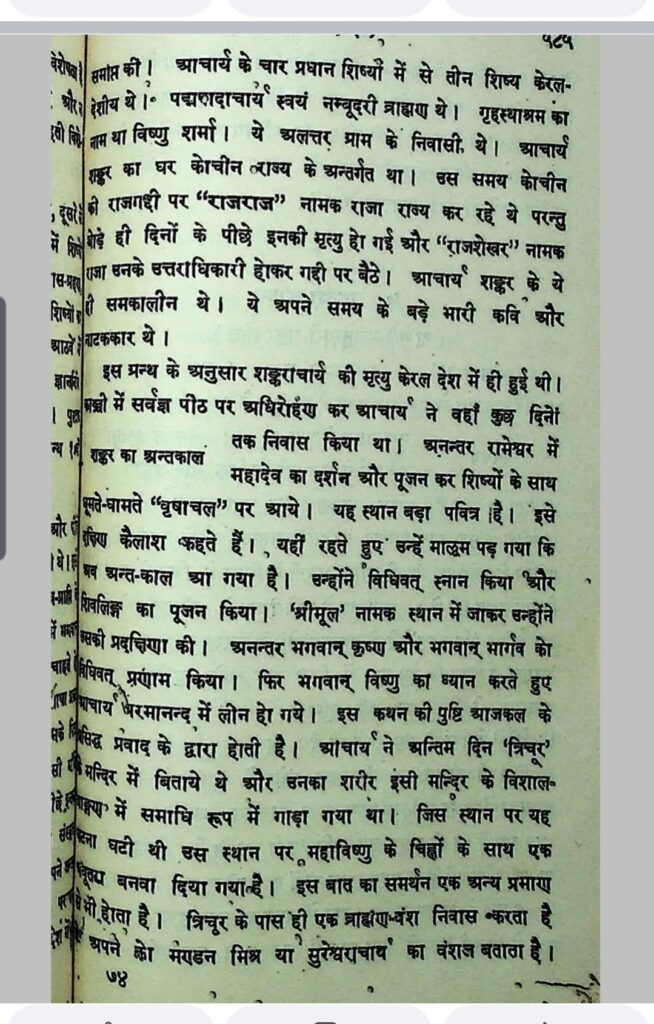
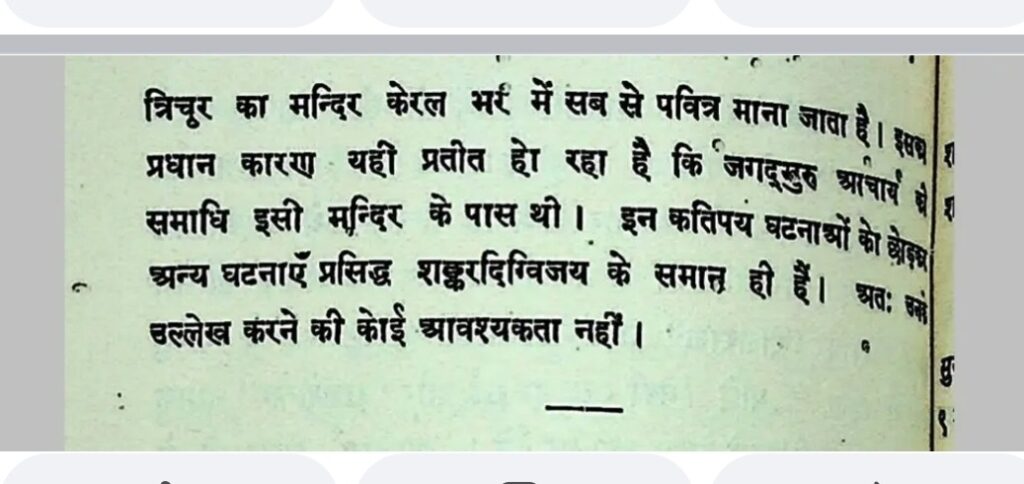
It is quite common knowledge that Sankara was born at Kaladi, in Kerala. All biographical sketches about Sankara state that his father, Sivaguru, performed penance at the sacred Tiruchivaperur (modern Tiruchur) for an offspring.

About two miles and a half to the south east of Kumbhakonam there is a village called ‘Tiru- chivapuram’. Puranas as also Tevaram hymns record Sivapuram as a sacred spot where Vishnu in the form of a white boar (Varaha) has worshipped Siva. Tirunavukkarasar”, Jnanasambandar¹ and Arunagiri- nathar have extolled the shrine at Sivapuram.

A small sculptural representation of Varaha (boar) worshipping a Siva Lingam is seen on the Sivapuram southern wall (outside) of the sanctum sanctorum of the Sivapuram temple.

The outer Gopuram (tower on gateway) of this temple seems to be pretty old. There is an old Champaka tree in the front part of the temple, in accordance with one of the below mentioned lines (2), about this shrine, in Tevaram.

A stone plaque on the left side of the main entrance gives the name of the temple as “The Temple of Sivagurunathar.” And the name of the presiding Sivalingam in the temple is ‘Sivagurunatha’ according to the Sthalapurana and ancient tradition.

It is notable that the name of ‘Sivagurunatha’ and its curtailed form ‘Sivaguru’, are quite common and widespread among saivites in and around Kumbakonam.

And it is to be remembered that Sankaracharya’s father too bore the name ‘Sivaguru’. But this name is not quite so common around Tiruchur or Kaladi as in the Kumbhakonam area of the Kaveri Delta region.

(To Be Continued)

Sri Ramapati Misra, President of the Bombay branch of the Varnasrama Svarajya Sanga

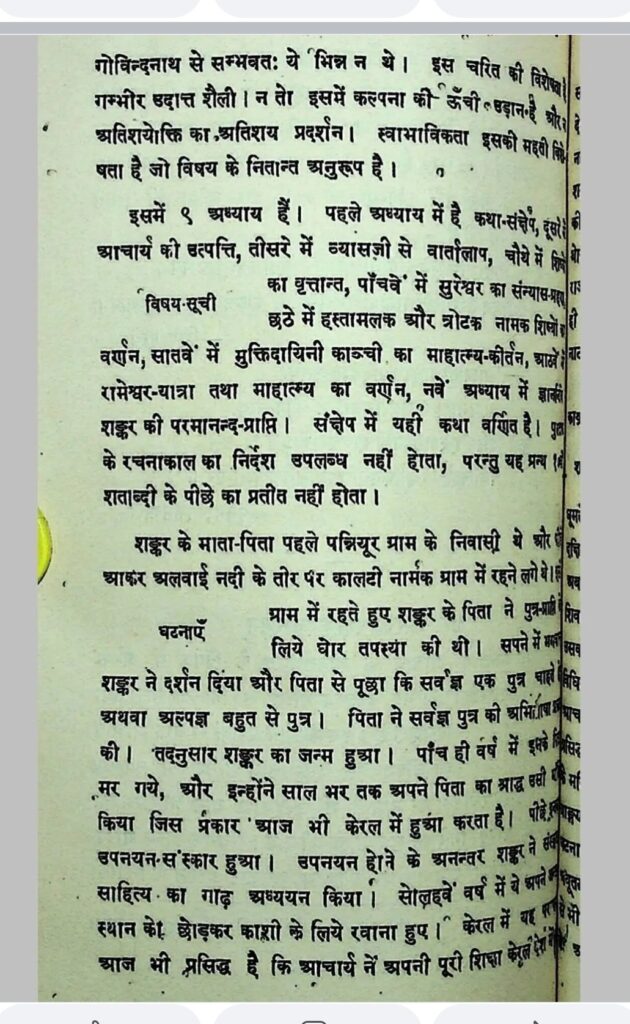
This passage is an extract of an article dtd. 01.4.1935, by Sri Ramapati Misra, President of the Bombay branch of the Varnasrama Svarajya Sanga, in Hindi.

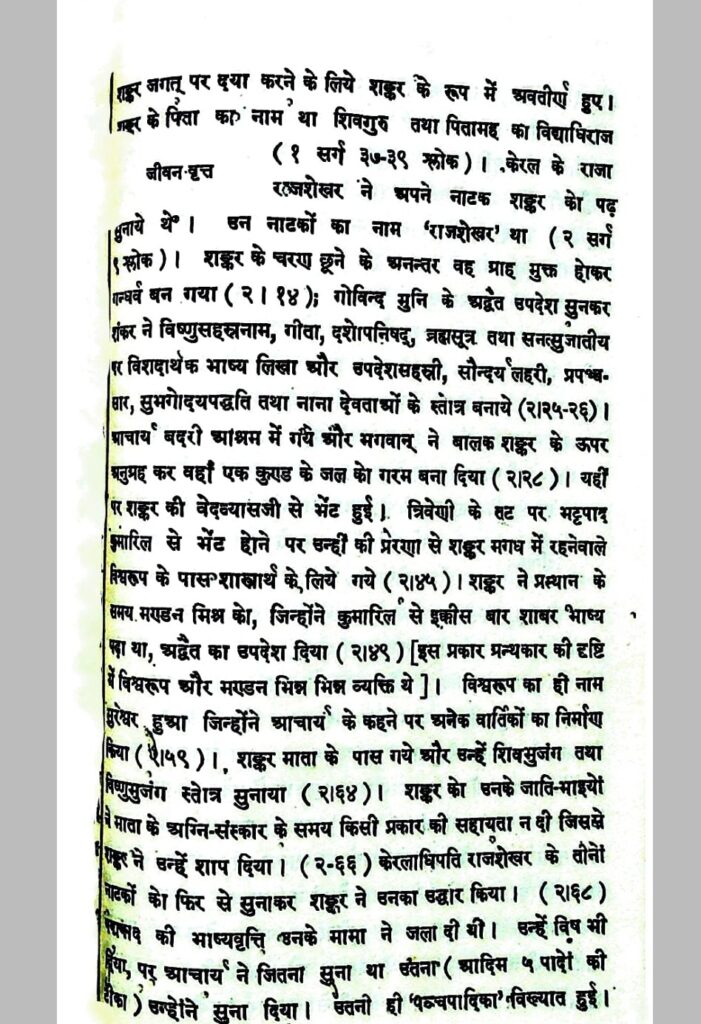
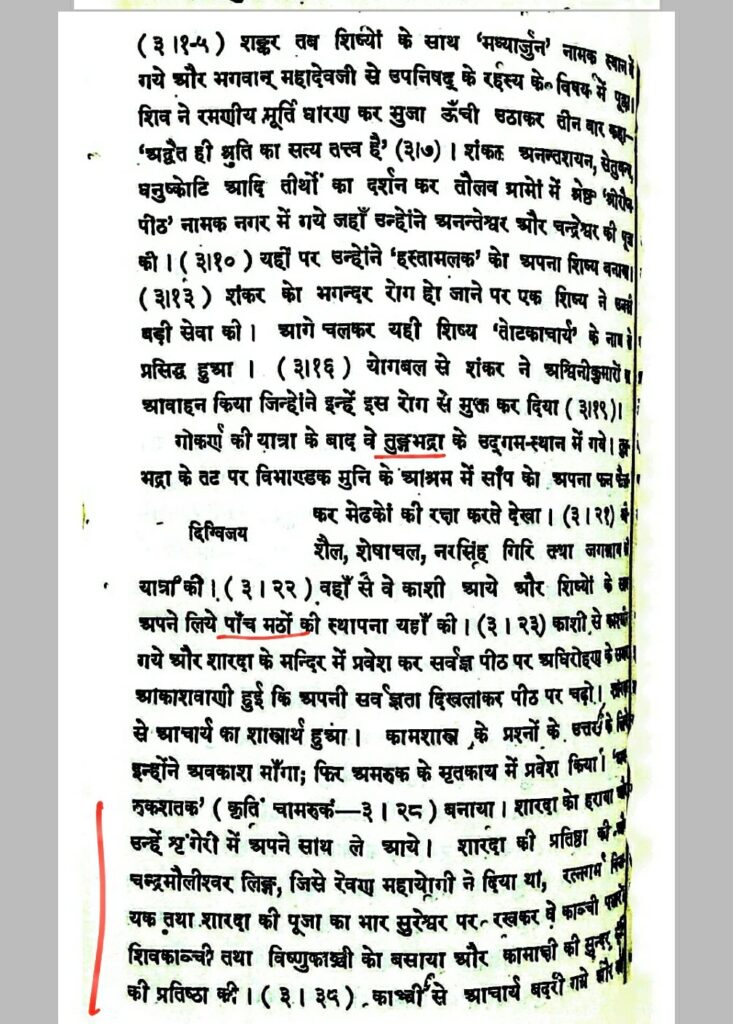
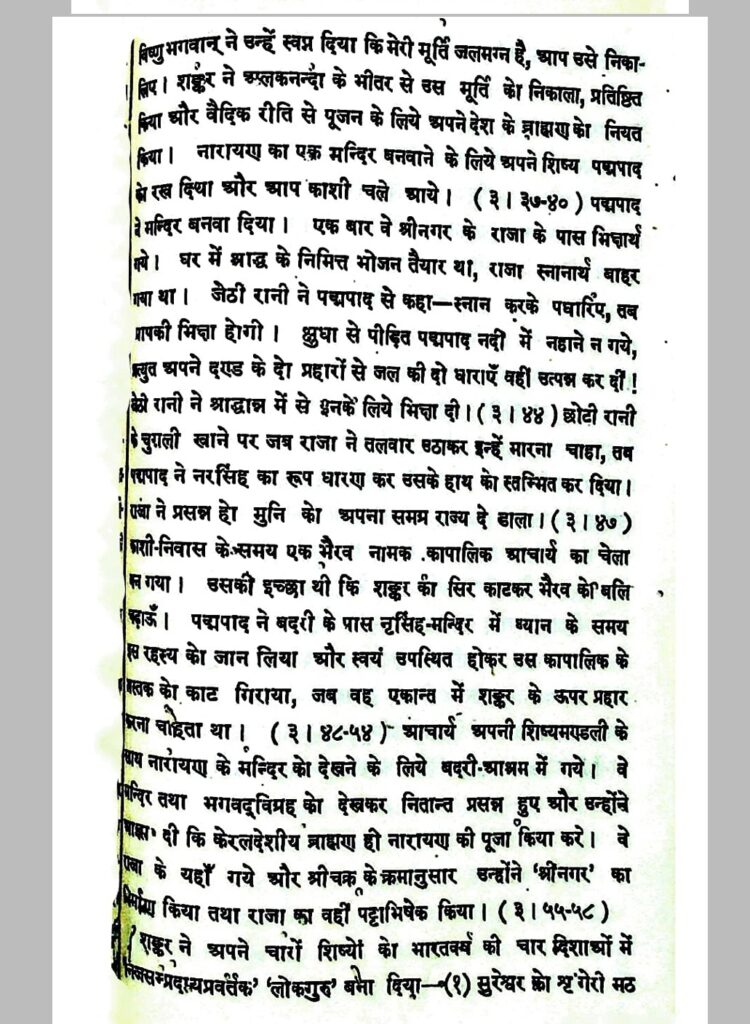
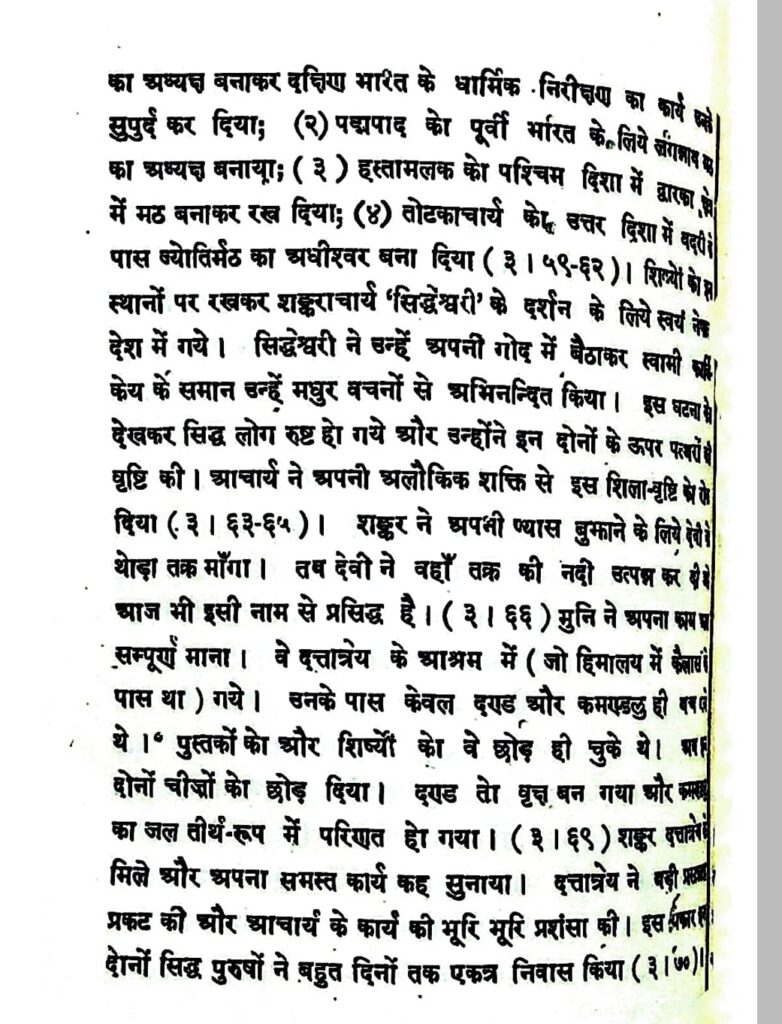
In the second paragraph, the Author states that among the Sankaracharya Pithas with Dasnami Ascetics as their Heads, Five Pithas have been famous from the beginning.

(Sri Sankaracharya And Sankarite Institutions By Sri Anantanandendra Saraswati of Sri Upanishad Brahmendra Matha)

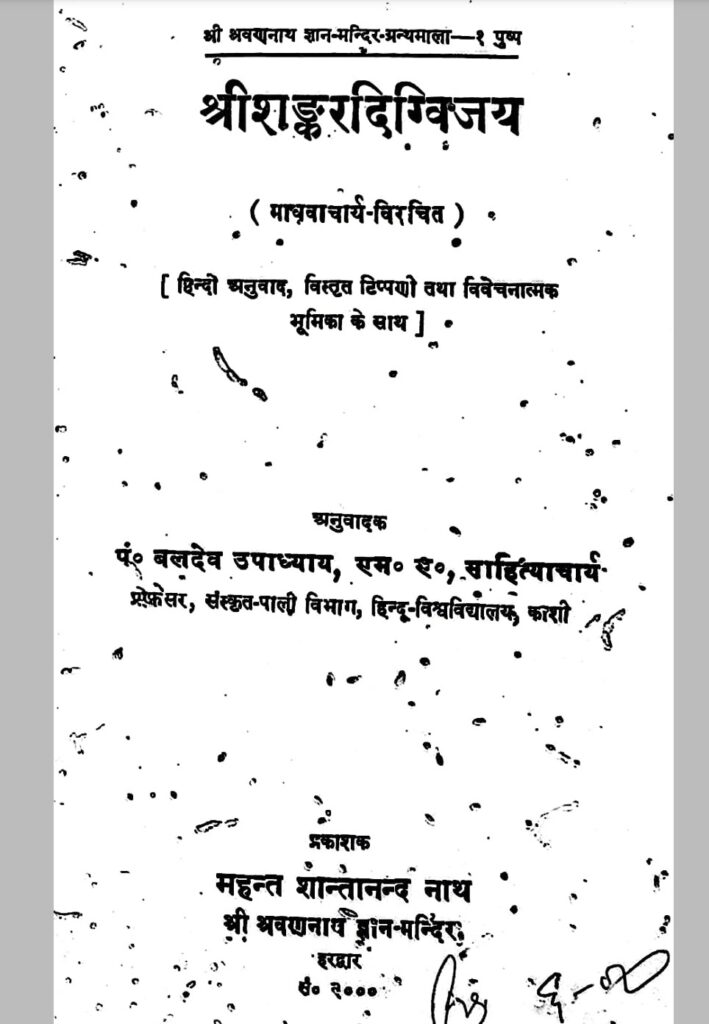
Madhaviya Sankara-digvijaya..3

” I have come to the conclusion that the work is no independent composition of one single author but is merely a collection of stanzas from four or even more earlier works, added to some nucleus if any that may have once existed, the nature and extent of which can not be ascertained today. I feel that it is unworthy of a genius like Vidyaranya. My findings are:

Out of the Total number of about 1848 verses, comprising the 16 chapters of this work, I.e. Madhaviya, about 1100 stanzas are found to be common to 4 other works, as follows:

1. Vyasacala Sankaravijaya … 475 stanzas

2. Tirumala Dikshita’s

Sankarabhyudaya …. 475 stanzas

3. Rajachudamani Dikshita’s

Sankarabhyudaya …. 125 stanzas

4. Ramabhadra Dikshita’s

Patanjali Carita …. 11 stanzas

Total 1086 stanzas

In most of the cases, verbatim stanzas in succession are found common. In a few cases, only some lines are common while in still fewer cases, substance is the same but stanzas have been composed afresh…”

– Sankshepa-Sankara-jaya of Madhavacarya, Dr.W.R.Antarkar, Post-graduate and Research Department Series No.45, Bhandarkar OrientalResearch Institute, Pune (2004)

Madhaviya Sankara-digvijaya – 2

Eminent scholars have pronounced that Madhaviya Sankaravijaya is not a work of Vidyaranya and that it is not of much historical value, vide:-

(1) ‘Sanskrit – English Dictionary’ – Sir Monier Williams 1899

(2) ‘Catalogue of Sanskrit Manuscripts’ – Dr. Burnell.

(3) ‘History of Naga Sannyasins’ — Dr. Jadunath Sircar.

(4) Article in ‘Indian Antiquary’ — Vol. V. by K.T. Telang.

(5) Preface to ‘Naishadiya Caritam’ of Sriharsa (p.III) by Mahamahopadhyaya Dadica Pandita Sivadatta Sarma.

(6) Preface to ‘Karpuramanjari’ by Mahamahopadhyaya Durga Prasad.

(7) ‘Bengali Visvakosa’ (Hindi edition – 1892).

(Hindi translation of ‘Ratnaprabha’ and ‘Bharatiya Samskṛti aur Sadhana (1962 and 1977 — page 95) by Mahamahopadhyaya, Padmavibhushan Gopinath Kaviraj

(9) ‘The Age of Sankaracarya;’ (p.10) by Pandit N. Bhashyacharya (Adyar Library, Madras – 1890).

(10) ‘Sankaracarita’ by Mahamahopadhyaya Sripada Krishnamurthy Sastri (A.P.).

(11) ‘Sankaracarya’s Life’ by Dhirendranath Pall (Bengal).

(12) ‘Sankaracarya Andhra Mahakavya’, by Vembrarlu Suryanarayana Rao.

(13) ‘Indian Chronology’ — by Dr. Triveda — Bharatiya Vidya Bhavan, Bombay 1959.

(14) ‘Sankaravijaya Dindima’, by Brahmavidyananda Bharati Swami (pp.51, 52).

(15) Sankaracarya’ (in Hindi) by Prof. Baladev Upadhyaya (published by Hindustani Academy, Allahabad, 1962).

(16) ‘Age of Vidyaranya’, by Prof. K.R. Venkatraman.

(17) ‘Sankshepa Sankara-jaya of Madhavacarya’ by W.R.Antarkar, Bhandarkar Oriental Research Institute, Pune (2004)

Madhaviya Sankara-digvijaya – 1

The Madhaviya Sankara-digvijaya is not included in the canonical works of Sri Vidyaranya. This book was published with Sri Vidyaranya’s name in the Anandashram edition, Series no.22, Poona, only in 1891.

The author of this recent work is decidedly not Vidyaranya for the following reasons :-

1. The epithet Navakalidasa (Canto I, 9 & 10), assumed by the author, is not found in any of Vidyaranya’s works.

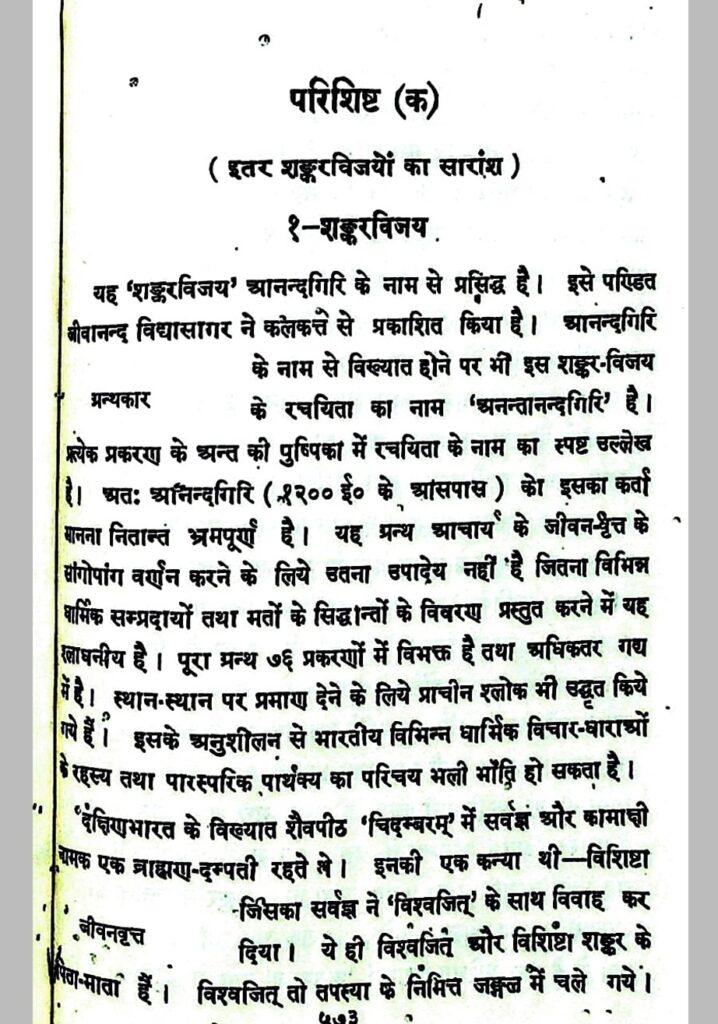
2. Navakalidasa Madhava, author of Bhagavatacampu, and Navakalidasa Madhava, author of Sankaradigvijaya, have been identified as one and the same person by scholars.

3. Many verses have been quoted in this work from the biographies written by Vyasacala, Tirumala Dikshita and Rajacudamani Dikshita – all posterior to Vidyaranya.

4. References to Sankaracarya’s meeting Udayana, Dandin, Mayura, Abinavagupta and Sriharsha, (made in this work), is historically wrong.

5. Vidyaranya’s style is generally simple, and his verses are in Anushtup metre (Pancadasi- all 1571 verses and Anubhuti- prakasa — all 2809 verses) are only in Anushtup.

6. Style of Sankaradigvijaya is akin to that of Bhagavata Campu.

7. Sankaradigvijaya is not noted in any recognised list of Vidyaranya’s works.

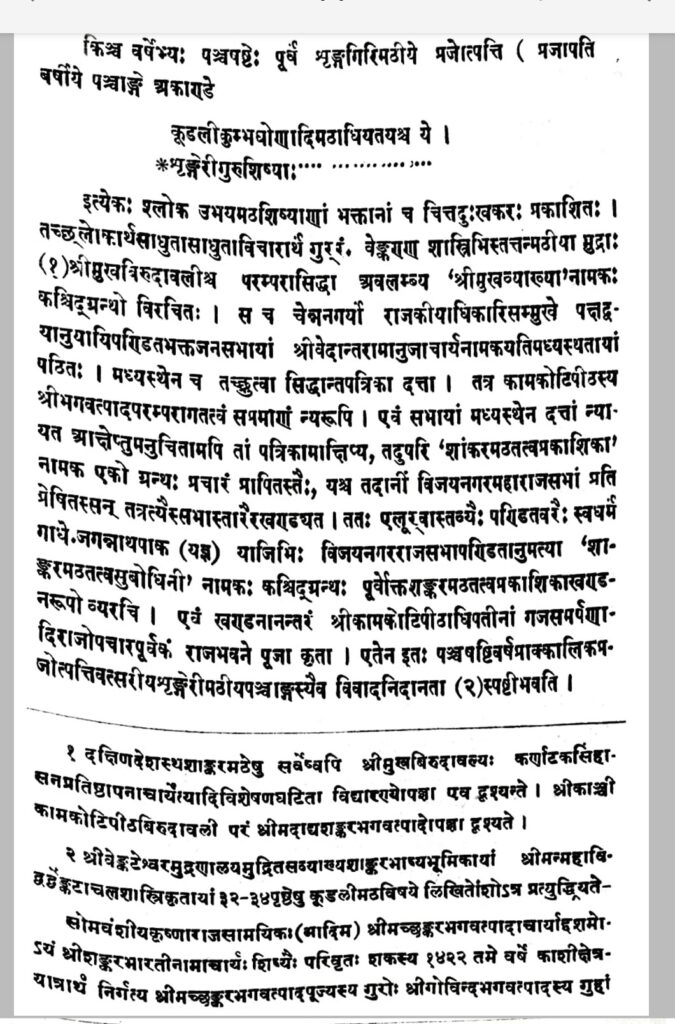
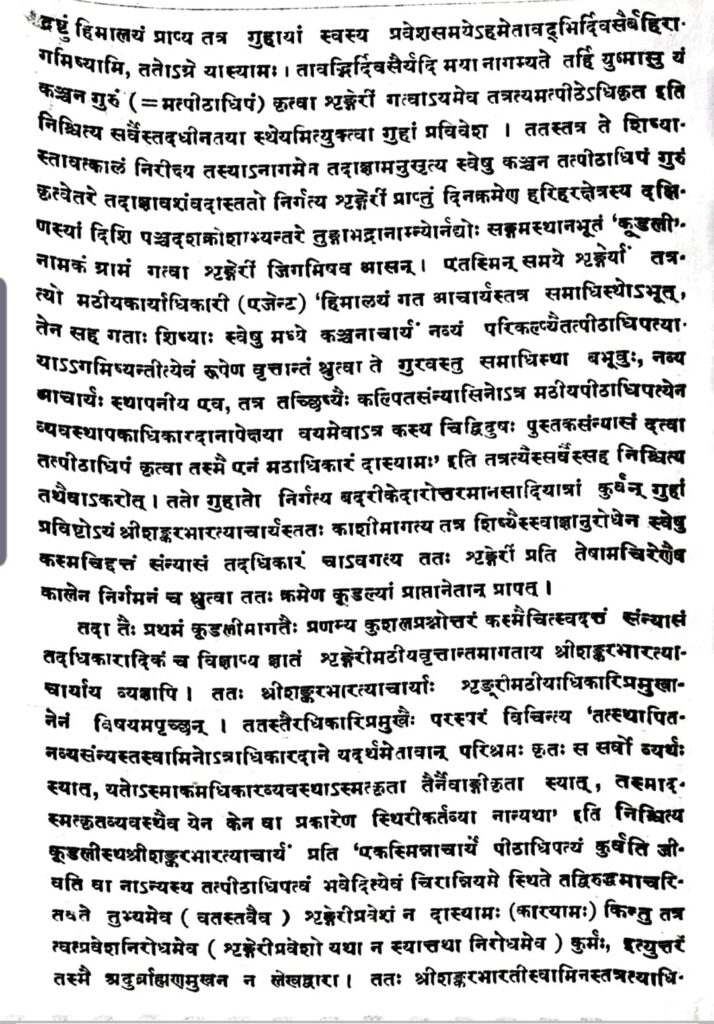
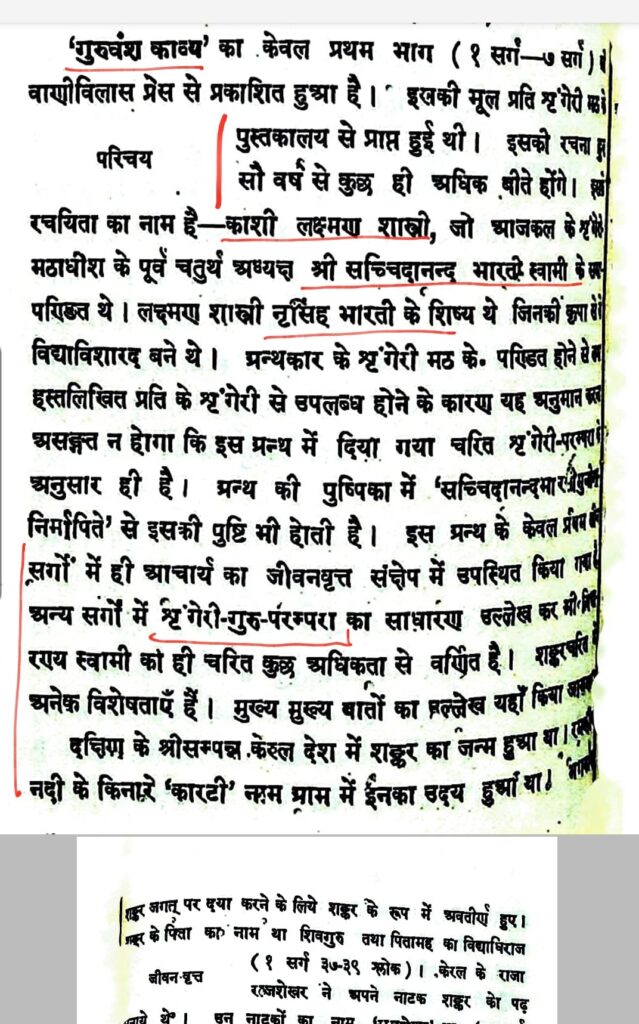
8.Guruvamsa Kavya and Madhaviya Sankaravijaya, the two most authoritative texts of the Sringeri matha give different versions of incidents of the life of Sankaracarya.

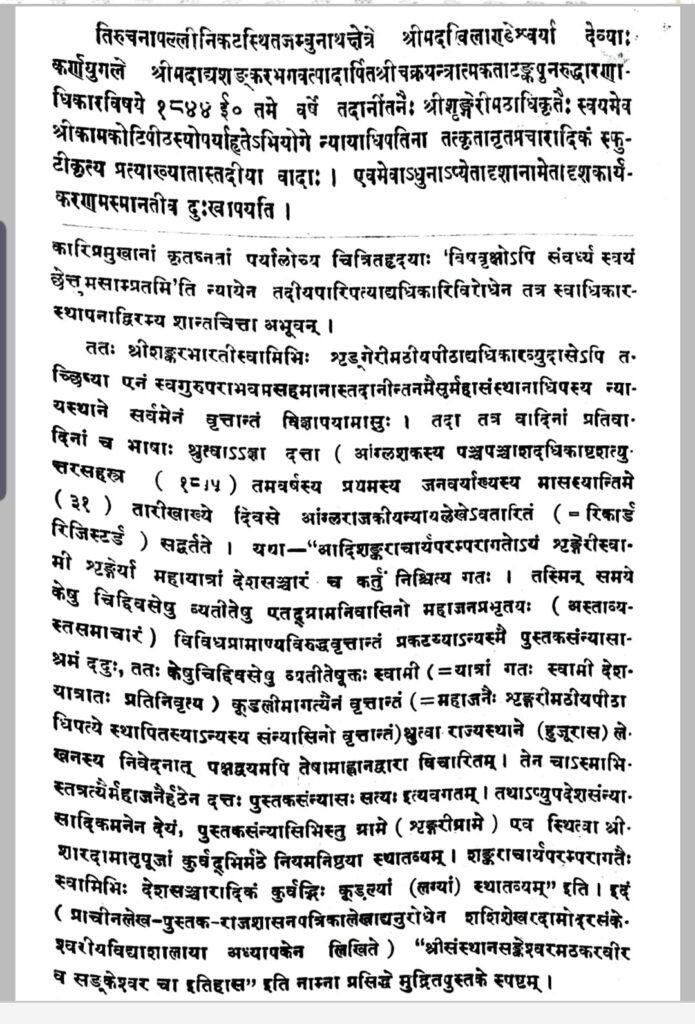
9. During the Tatanka Pratishta case, the Court asked the two parties to furnish evidence in support of their claim. Only the Kanchi Matha (defendant) placed ancient works like Sivarahasyam, Anandagiriyam Markandeya Samhita etc. as evidence. The plaintiffs did not produce any Sankaravijaya including Madhaviya before the Court. Hence, few eminent scholars opine that this work could have been prepared and produced after 1844, by using the name of Sri Vidyaranya muni.

காசியுள் காஞ்சி..3

ஸ்ரீபஞ்சானன தர்க்கரத்ன பட்டாசார்யர்.. (மூன்றாம் பகுதி)

1935-ஆம் ஆண்டு ஸெப்டம்பர் மாதம், 23-ஆம் நாள் மாலையில் ஸ்ரீ மஹா ஸ்வாமிகள் கல்கத்தா மாநகரிலுள்ள வங்காள ப்ராம்மண ஸபைக்கு விஜயம் செய்தார்கள்.

வங்கம் ப்ராம்மண ஸமூஹத்தினர் மட்டுமல்லாது, ஹிந்துஸ்தானி, மஹாராஷ்ட்ர, ஆந்த்ர, குஜராத்தி, தமிழ் ப்ராம்மணர்களுமாக சுமார் ஆயிரம் பேர்கள் அங்கு கூடி ஸ்ரீஸ்வாமிகளுக்கு மிக விமர்சையான வரவேற்பை அளித்தனர்.

ஸபையின் தலைவரான பட்டாசார்யர், ஸ்ரீமஹாஸ்வாமிகளுக்கு, ஸம்ஸ்க்ருத மொழியில் அச்சிடப்பட்ட நீண்டதோர் வரவேற்பு இதழை, வாசித்தளித்தார். அவ்விதழின் சில பகுதிகளின் தமிழாக்கம் கீழே கொடுக்கப்பட்டுள்ளது:-

“ஸ்ரீமத் ஆதி சங்கர பகவத்பாதரின் பரம்பரையின் ஜோதியாக ஸ்ரீகாமகோடி பீடத்தை அலங்கரிக்கின்றவர்களும், பரமேச்வரனின் மனித உருவமோ என ப்ரமிக்கும்படி, துறவிகளின் அரசராகத் திகழ்ந்து வரும் தங்கள் வரவு நல்வரவாகுக!”

“நமது தர்மம் யாதென அறியாது, துன்பக்கடலில் சிக்குண்டு தவிக்கும் மக்களை, தங்களது நல் உபதேசங் களாலும், கருணை மிகுந்த அருளாலும் கைகொடுத்துக் கரை ஏற்றி, நல்வழியில் நடத்திச் செல்லும். தங்கள் விஜயம், இக் காசி மாநகரத்திற்கு, இப்போது கிடைத்துள்ளது, நாங்கள் செய்துள்ள புண்யத்தின் பயனன்றி வேறில்லை. சிவபிரான் போன்று எங்கள் முன் ப்ரகாசிக்கும் தங்கள் திருவடித் தாமரைகளை வணங்கி, சில வார்த்தைகளைச் செப்ப விரும்புகின்றோம்”.

“ஸ்ரீஆதிசங்கரரது காமகோடி பீடத்தின் 68-ஆவது ஆசார்யாளாகவும், ஜகத்குருவாகவும் திகழும் தாங்கள். கருணையுடன் இங்கு விஜயம் செய்து, இப்பகுதியைப் புனிதமாக்கியது எங்கள் பெரும் பாக்யம்.’

“மேலும் புண்ய தீர்த்தங்களில் நீராடல், க்ஷேத்ரங் களிலும், ஆலயங்களிலும் ஸேவிப்பது, பின்னர் வரக்கூடிய ஒரு காலத்தில்தான் பயனை அளிக்கும். ஆனால் மஹான் களைத் தரிசிப்பதனாலேயே ஒரு மனிதனின் பிறவி கடைத்தேறுகின்றது, என பாகவதம் உணர்த்துகின்றது.”

“இத்தகைய மேன்மைகளையுடைய தங்களை எப்படிப் போற்றுவதென தெரியவில்லை; எனது வாக்குத் தழுதழுக்கின்றது, சரீரம் ஆனந்த பரவசத்தால் மயிர்கூச்சலடைகின்றது, கண்கள் ஆனந்தக் கண்ணீர் சொரிகின்றன.

மிக்க மங்களகரமான இந்த நன்னாளில், ஸனாதனமான நமது தர்மத்தைப் பிரதிஷ்டை செய்வதில் தீவிரமாக முயற்சித்து வரும் ஆசார்யமூர்த்திகளான தங்களுக்கு, எங்களது தழுதழுத்த குரலில், ஜயகோஷத்துடன் நல்வரவு கூறுகின்றோம்”.

(ஸ்ரீ அ.குப்புஸ்வாமி ஐயர் உள்ளிட்டோரின் குறிப்புகளிலிருந்து தொகுத்து வழங்கப்படும் தொடரின் மூன்றாம் பகுதி நிறைவுற்றது.)