प्रातः स्मरणीय..
Where oral and documentary evidence shows that in the matter of nomination of successor or to a Mahantship seniority is not decisive factor but that heredity and efficiency in management coupled with good moral character and adherence to the religious rites practised at the Math and a spirit of service etc., it is for the person claiming the Mahantship to prove competence.
(Mahant Bhagawan Shagat vs. Girijanandan Bhagat, (1972) 2 SCJ 730; AIR 1972 SC 814)
Scrutiny of Srimukhas of Sankarite institutions
In the year 1871-72, a new verse was introduced in the Sringeri Almanac. The accuracy of the statement made in this verse engaged the attention of many scholars continuously for about six years.
The examination of this newly inserted verse, by scholars all over the land revealed many historical facts including an important one, i.e., that Sri Vidyaranya of the Veda Bhashya fame went to Hampi or Vijayanagar from Kanchi and after his spiritual life-work there which included the installation of the heads of Virupaksha and Sringeri mutts finally returned to Kanchi where he attained Siddhi.
The Astikas of Madras who had an organization or Sabha for determining dharmic questions and correct lapses, if any, in the community were in the habit of assembling periodically in the premises of the Madras branch of the Kamakoti Peetha at 119, Thambu Chetty Street, Madras, for the specific use of which this mutt had been dedicated by a Vaisya gentleman in the early years of the emergence of the City of Madras. The Astikas were represented by 18 Jaladhi patis, who were the accredited heads of the different communities. The meetings were presided over by an elected Sabhapati.
At one of such meetings the verse in the almanac which was intended to belittle the importance of the Kamakoti Peeta and the Kudali Mutt in Shimoga district was taken up for consideration.
The Sabhapati on behalf of the Sabha authorised Sri Gurram Venkatrama Sastri of Nellore, who had previously published some of his researches in Dharma Sastra, to consider the correctness of this sloka and make a report to the Sabha. He accordingly collected all relevant literary and documentary materials and after studying them conveyed the conclusions of his research in the form of a small booklet under the title ‘Srimukha Vyakhya’.
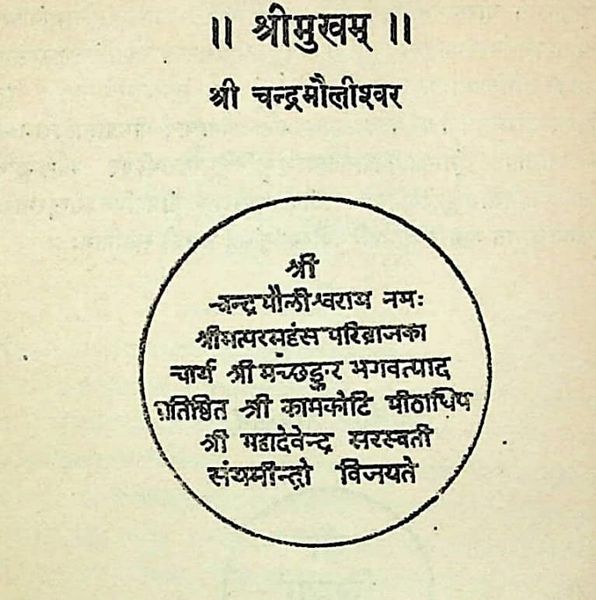
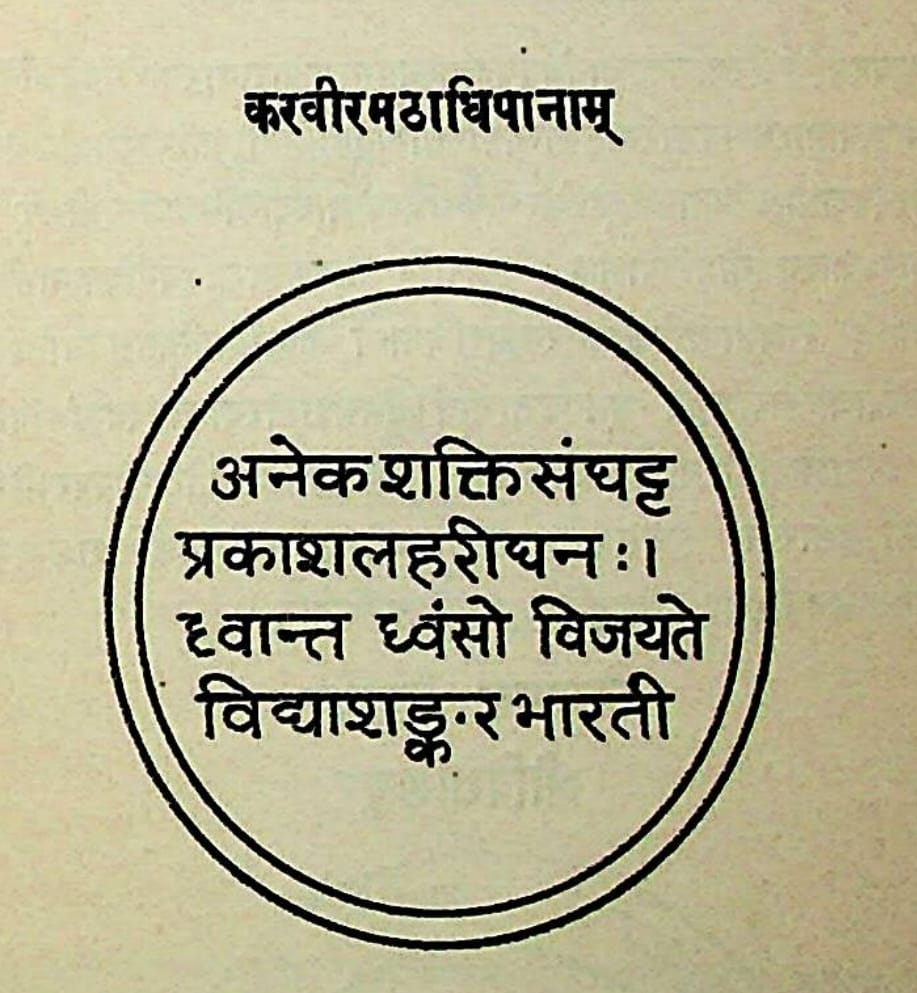
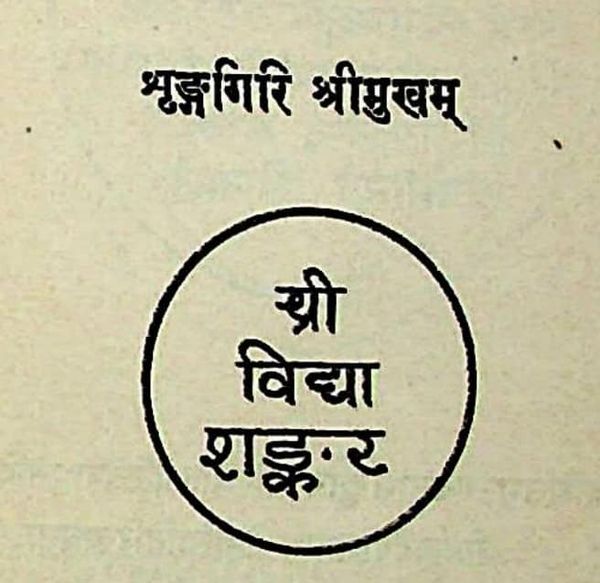
The method of research adopted by him was somewhat novel. He did not attach much importance to the varying literary works connected with the life and doings of Sri Sankaracharya but relied for his conclusions on the forms of honorific epithets contained in the Srimukhams and the inscriptions and in the shape of the seals of the respective mutts.
Copies of all the Srimukhams containing uniform epithets and seals were collected and every detail was minutely and meticulously examined.
The final conclusion was that the epithets and seals of all the mutts except the Kanchi Peetha, then presided over by Sri Mahadevendra Saraswati Sankaracharya Swami, pertained to the advent of Sri Vidyaranya of Vijayanagaram and Veda bhashya fame, while the epithets and seals of the Kanchi Mutt alone pertained to Sri Sankaracharya. Sri Kamakoti Peetam was established by the Great Acharya for His own residence at Kanchipuram where He attained Siddhi. The other mutts were established for or by the Sishyas of the Acharya and their parampara.
The Srimukhams collected by him pertained to the following mutts: Pushpagiri in the Andhra, Virupaksha, Kudali, Amani (Avani) and Sringeri in Karnataka and Kanchipuram in Tamilnadu.
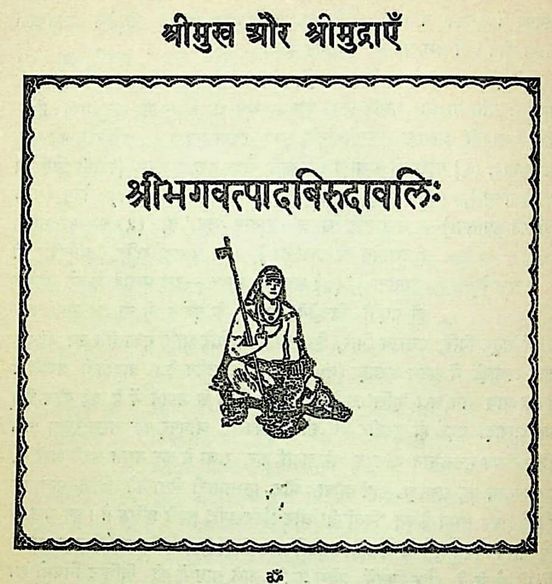
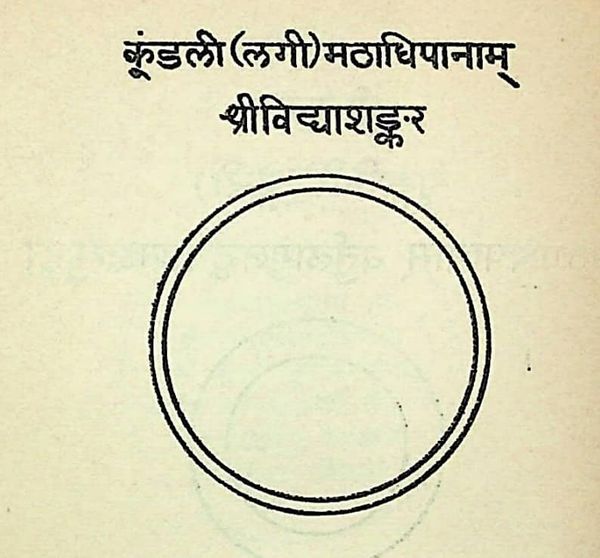
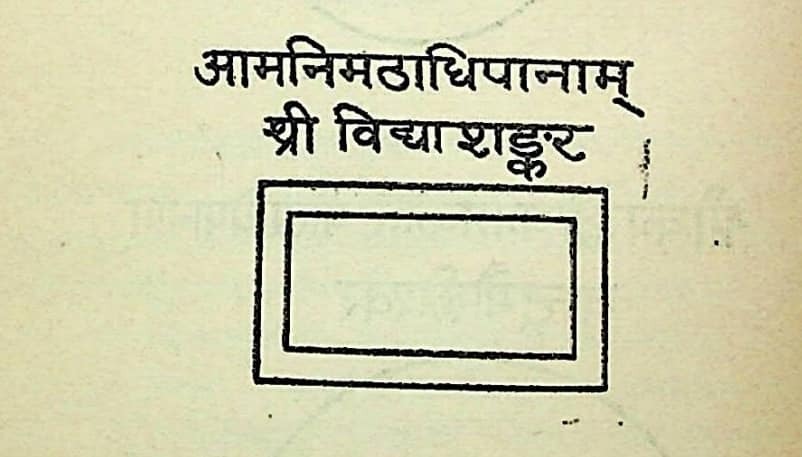
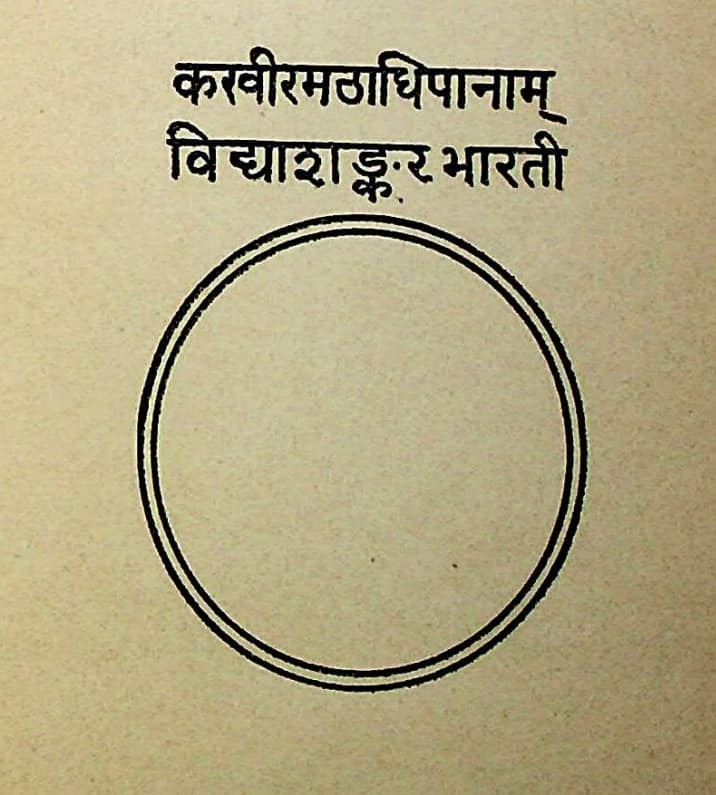
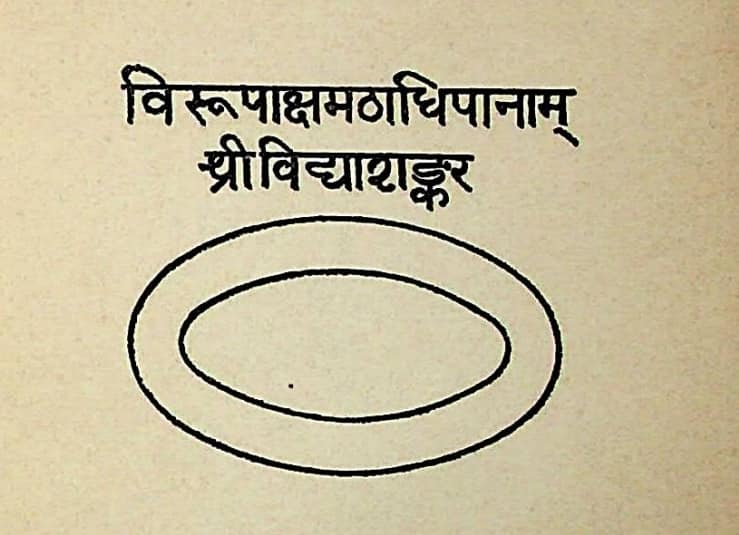
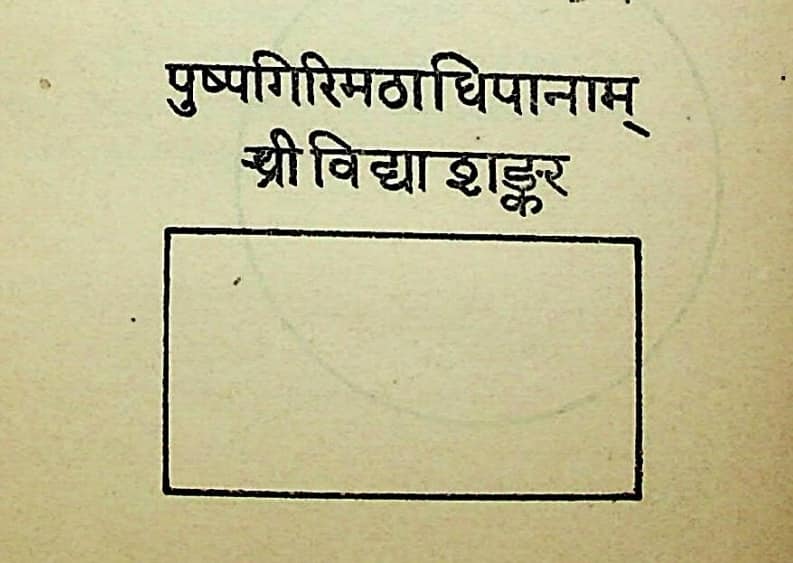
SRIMUKHA VYAKHYA
(1871-72)
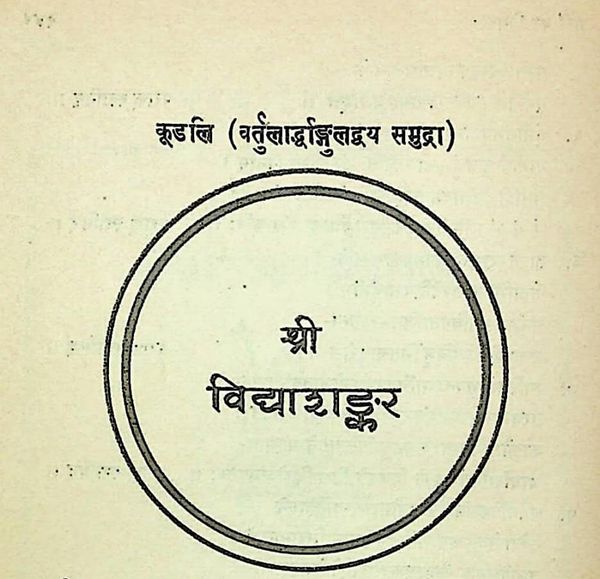
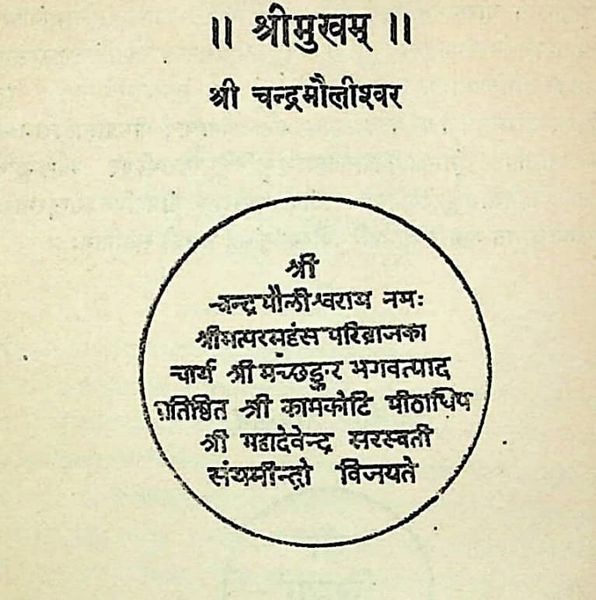
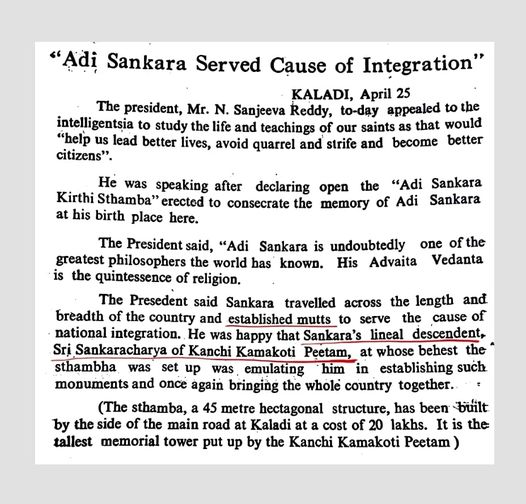
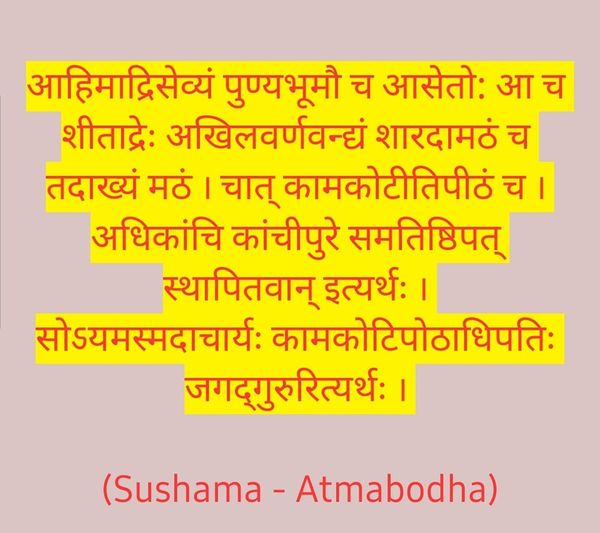
“Sri Sankara established at Kanchi the Sarada Matha or the Kamakoti Pitha, renowned from the snow-clad Himalayas to the southern sea, for the administration and the enforcement of all Dharmas”.
It is worthy of note that Atmabodha emphazises the fact that Sri Sankara himself was the first Acharya of the Kamakcti Pitha.
(The Traditional Age of Sri Sankaracharya and The Mathas by A.N.Aiyer and S.L.N..Sastri)
“We cannot do better than crown our arguments with the considered verdict of Mahamahopadhyaya Madhava Sastri Bhandari, of the Punjab Oriental University, who writes: –
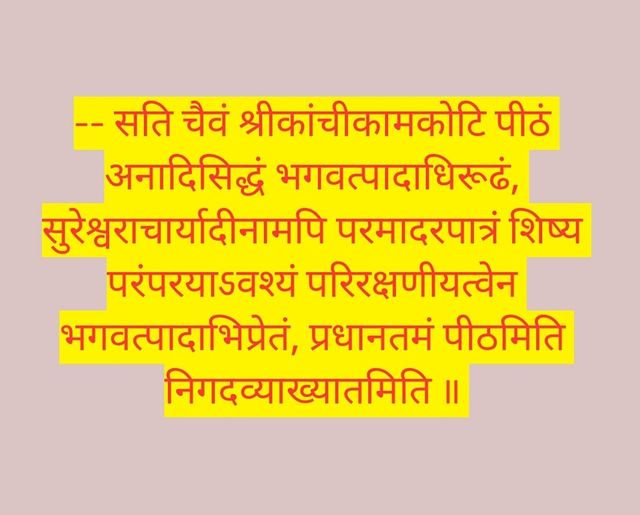
“Such being the case, the Kanchi Kamakoti Pitha is unquestionably the most ancient, presided over by the Bhagavatpada himself, held in high esteem by Suresvaracharya and others, worthy of being followed by all Sisyas, and foremost in importance.”
(The Traditional Age of Sri Sankaracharya and The Mathas by A.Nataraja Aiyer and S.Lakshminarayana Sastri)
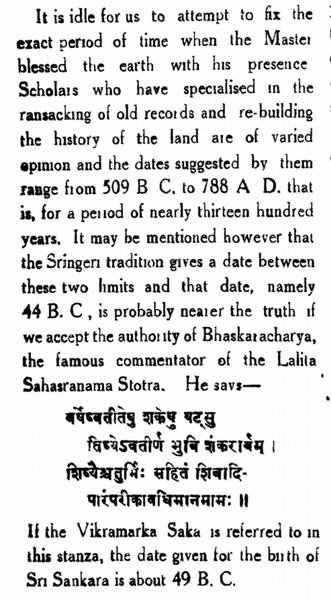
” It is idle for us to attempt to fix the exact period of time when the Master blessed the earth with his presence Scholars who have specialised in the ransacking of old records and re-building the history of the land are of varied opinion and the dates suggested by them range from 509 B C. to 788 A D. that is, for a period of nearly thirteen hundred years.
It may be mentioned however that the Sringeri tradition gives a date between these two limits and that date, namely 44 B. C, is probably neater the truth if we accept the authority of Bhaskararaya, the famous commentator of the Lalita Sahasranama Stotra.
If the Vikramarka Saka is referred to in this stanza, the date given for the birth of Sri Sankara is about 49 B. C.”
(SRI SRINGERI MUTT By R. KRISHNASWAMY AIYAR, M.A, B. L., Advocate, Tennevally – The Journal of the Sri Sankara gurukulam Srirangam, Vol. IV, No. 13.)
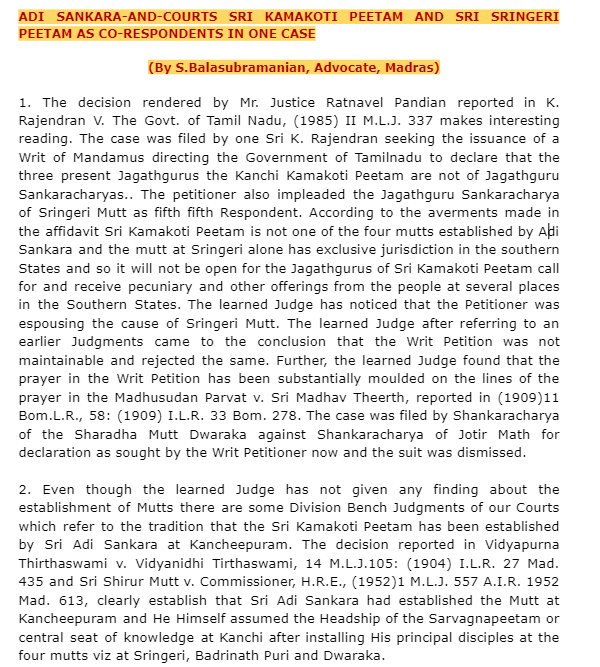
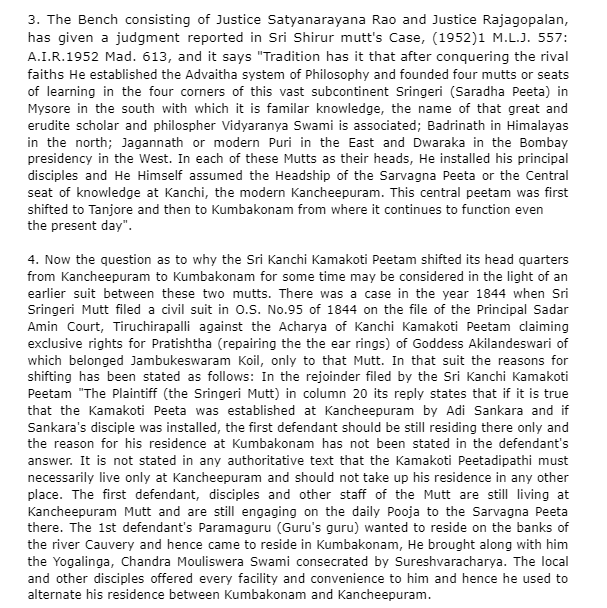
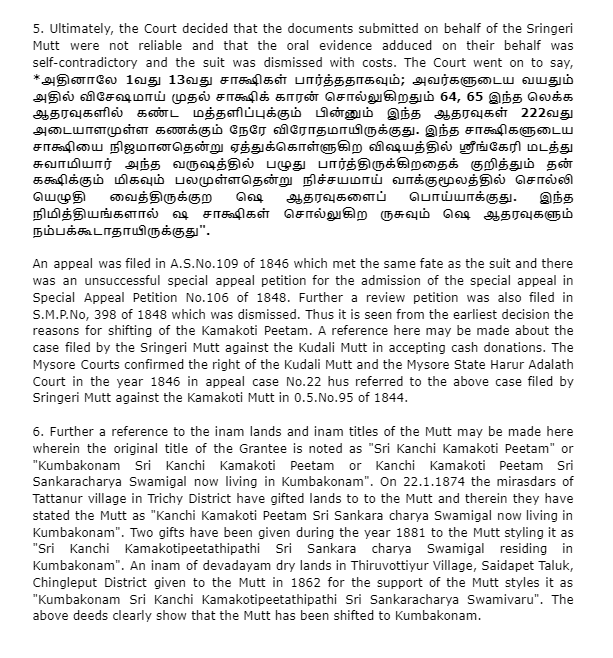
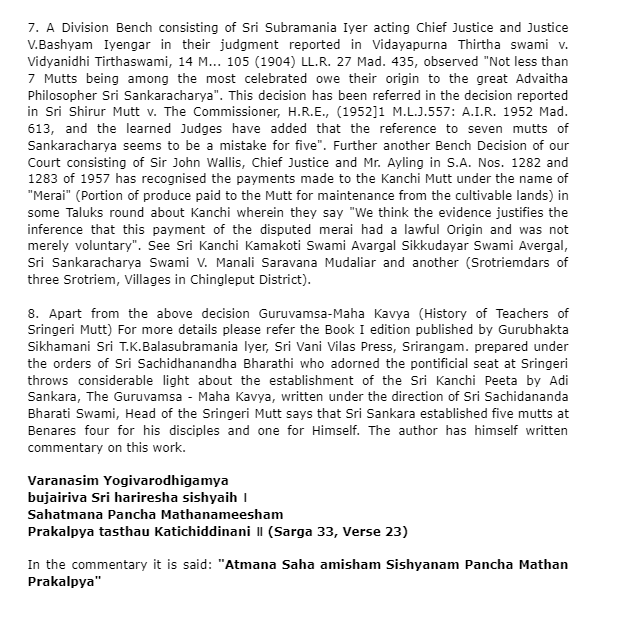
ADI SANKARA-AND-COURTS : SRI KAMAKOTI PEETAM AND SRI SRINGERI PEETAM AS CO-RESPONDENTS IN ONE CASE
By S.Balasubramanian, Advocate, Madras.
“…. Thus, it can be seen from Judicial pronouncements and other records mentioned above that it is not possible to have more than one view, namely, that Sri Adi Sankara had established the present Sri Kamakoti Peetam at Kanchipuram”.
1986 Madras Law Journal